MANGAREVA ARCHIPELAGO and EASTER ISLAND
According to Beechey, who was one of the first European to visit Gambier Islands in 1825, natives used rafts. Some were 13 to 17 meters long and could carry an average of 20 people (D’Urville says that some could carry 40)
These rafts were simply constructed from a number of large tree trunks, sharpened to a point at the front and decreasing in length from the middle to the edges.
These rafts could sail. They rigged an Oceanic lateen sail.
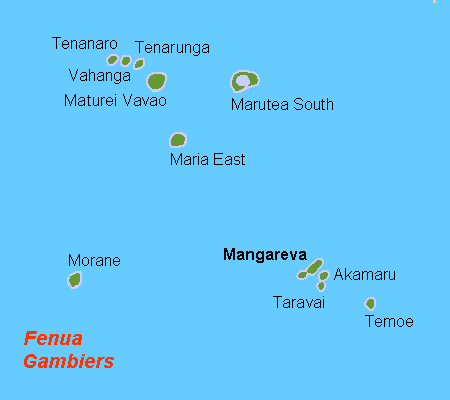
Mangareva-Gambier map.png
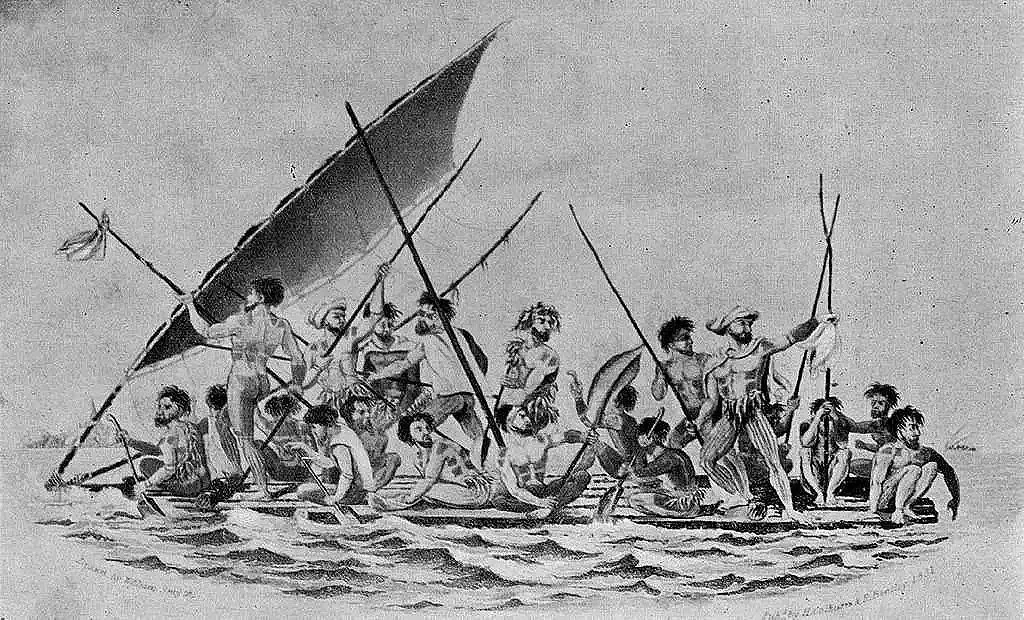
Mangareva raft.
This engraving depicts a Mangareva raft canoe from the voyage of Frederick William Beechey, likely dating to the early 19th century’
It illustrates indigenous inhabitants of the Gambier islands, or Mangareva, in French Polynesia navigating the sea on a traditional raft.
Who was Frederick William Beechey ?
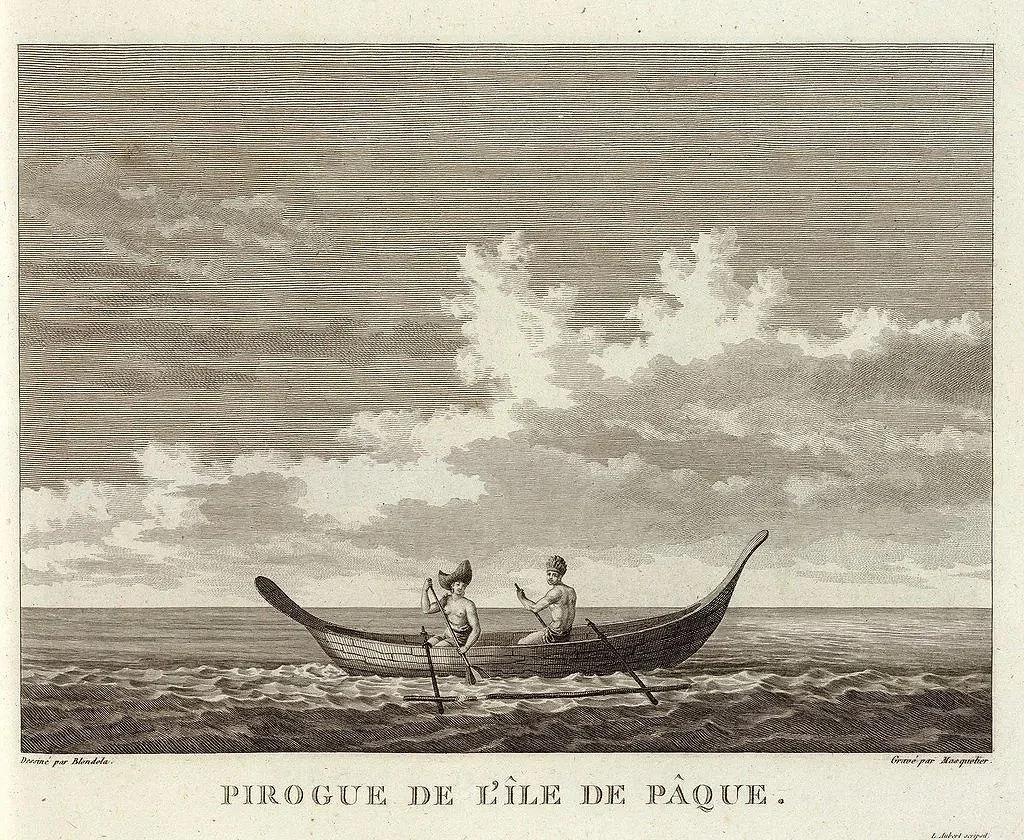
Easter+Island.jpg
Sketched by Lieutenant Blondela and engraved by Louis Joseph Masquelier and published in Paris in 1797 in the Atlas du Voyage de la Perouse., depicting an Easter Island canoe.
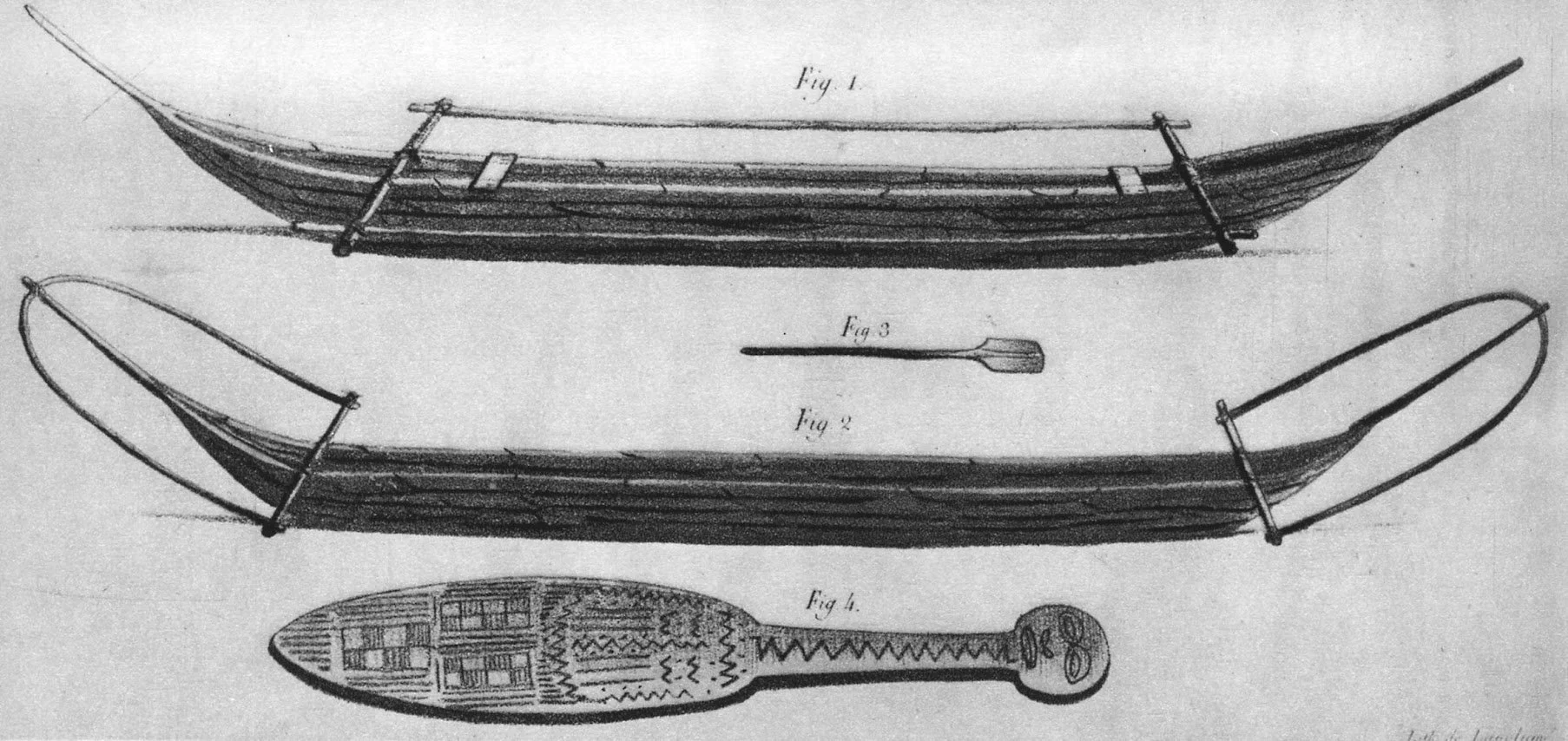
This image is an engraving tiled “Bateaux a cames de l’ile de Paques (Canoes of Easter Island) by Louis Choris, created around 1823
It illustrates traditional outrigger canoe (waka ama) and a paddle (hoe) used by early inhabitants of Rapa Nui. (Easter Island).
Louis Choris was a painter and naturalist who documented Pacific island culture during his travels in the early 1800s.
Choris' works are now held in public collections by such museums as the Anchorage Museum of History and Art, the Honolulu Museum of Art and the Oakland Museum of California.