


























































https://en.wikipedia.org/wiki/Polynesian_Triangle
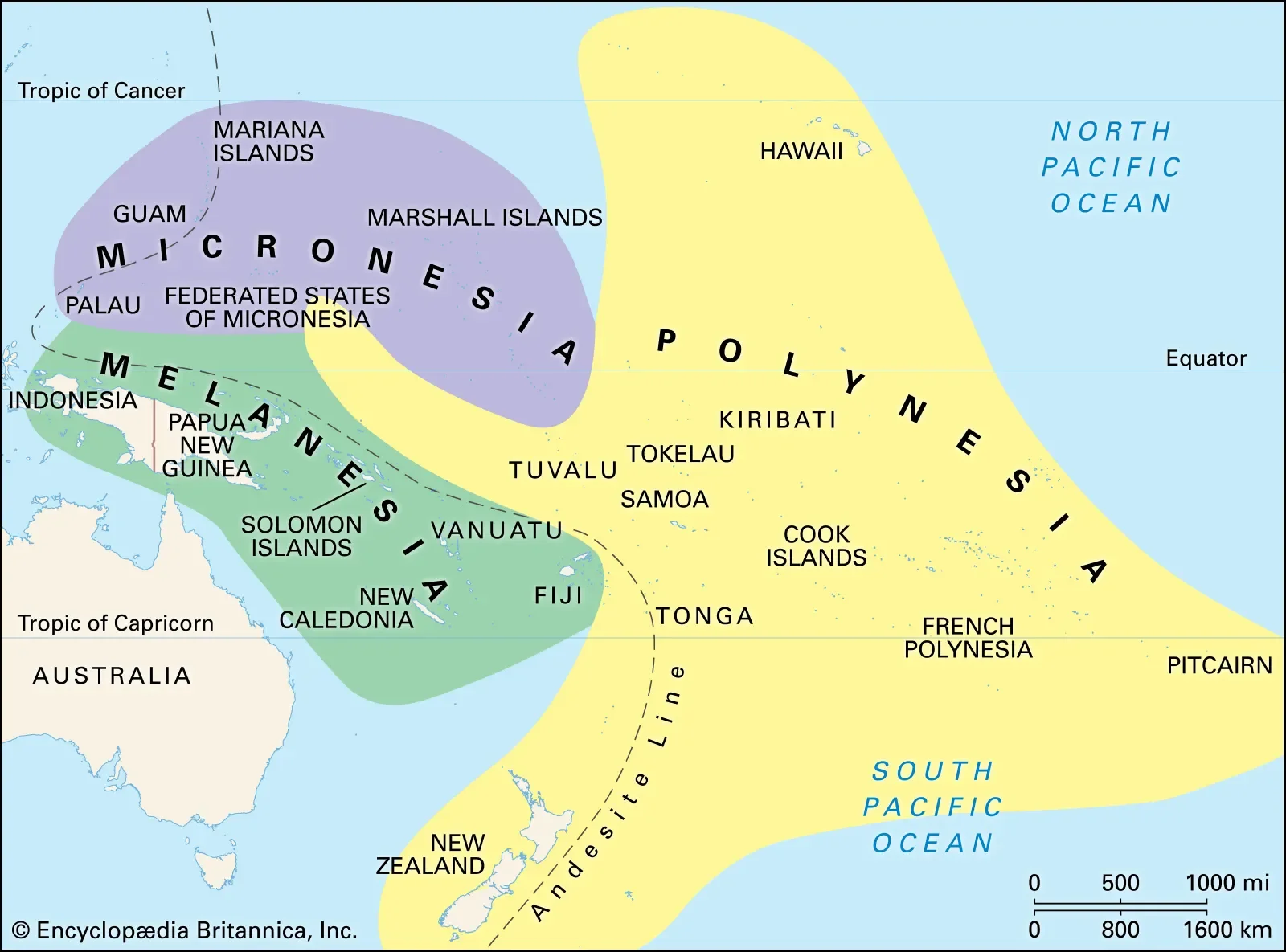
Polynesia is a subregion of Oceania, made up of more than 1,000 islands scattered over the central and southern Pacific Ocean. The indigenous people who inhabit the islands of Polynesia are called Polynesians. They have many things in common, including linguistic relations, cultural practices, and traditional beliefs. In centuries past, they had a strong shared tradition of sailing and using stars to navigate.
Throughout Polynesia and Oceania in general, canoes have been, and in some cases still are, a primary means of transportation between islands. They also serve as an essential method for fishing along the shores. Some canoes were specifically designed to accommodate a large number of warriors for the purpose of waging war and conquering other islands. The size and construction of canoes were greatly influenced by the materials available on each particular island. For example, Hawaii was able to build large voyaging or war canoes using the renowned Koa tree. Meanwhile, the Māori in New Zealand constructed war canoes, known as "Waka Taua," that could be up to 130 feet long, utilizing the massive Kauri or Totara trees. While most canoes, regardless of size, were dugouts, some, particularly in Samoa , were built using plank construction.
Over the last 30 years, I have compiled a list of traditional Oceanic canoes, including full-size examples, models, representations in prints and paintings, both ancient and contemporary, with significant cultural, historical, and maritime importance, that I will organize geographically by Island, archipelago, and atoll
However, I would also like this section of my website to serve an educational purpose. Many of us who have never sailed across the vastness of the Pacific Ocean may take some time to locate, let's say, Tonga or Samoa on a world map, and even much more to find Tobi or Nukuoro atoll. Therefore, I added links to locate the island or atoll and to read about its geography, history, language, and the culture of its inhabitants, as they relate to the illustrated canoe. Same for the many naturalists, ethnographers, navigators, explorers, and drafters who contributed to our understanding of the multitude of canoe types across Oceania.
https://en.wikipedia.org/wiki/Polynesian_Triangle
Polynesia is a subregion of Oceania, made up of more than 1,000 islands scattered over the central and southern Pacific Ocean. The indigenous people who inhabit the islands of Polynesia are called Polynesians. They have many things in common, including linguistic relations, cultural practices, and traditional beliefs. In centuries past, they had a strong shared tradition of sailing and using stars to navigate.
Throughout Polynesia and Oceania in general, canoes have been, and in some cases still are, a primary means of transportation between islands. They also serve as an essential method for fishing along the shores. Some canoes were specifically designed to accommodate a large number of warriors for the purpose of waging war and conquering other islands. The size and construction of canoes were greatly influenced by the materials available on each particular island. For example, Hawaii was able to build large voyaging or war canoes using the renowned Koa tree. Meanwhile, the Māori in New Zealand constructed war canoes, known as "Waka Taua," that could be up to 130 feet long, utilizing the massive Kauri or Totara trees. While most canoes, regardless of size, were dugouts, some, particularly in Samoa , were built using plank construction.
Over the last 30 years, I have compiled a list of traditional Oceanic canoes, including full-size examples, models, representations in prints and paintings, both ancient and contemporary, with significant cultural, historical, and maritime importance, that I will organize geographically by Island, archipelago, and atoll
However, I would also like this section of my website to serve an educational purpose. Many of us who have never sailed across the vastness of the Pacific Ocean may take some time to locate, let's say, Tonga or Samoa on a world map, and even much more to find Tobi or Nukuoro atoll. Therefore, I added links to locate the island or atoll and to read about its geography, history, language, and the culture of its inhabitants, as they relate to the illustrated canoe. Same for the many naturalists, ethnographers, navigators, explorers, and drafters who contributed to our understanding of the multitude of canoe types across Oceania.
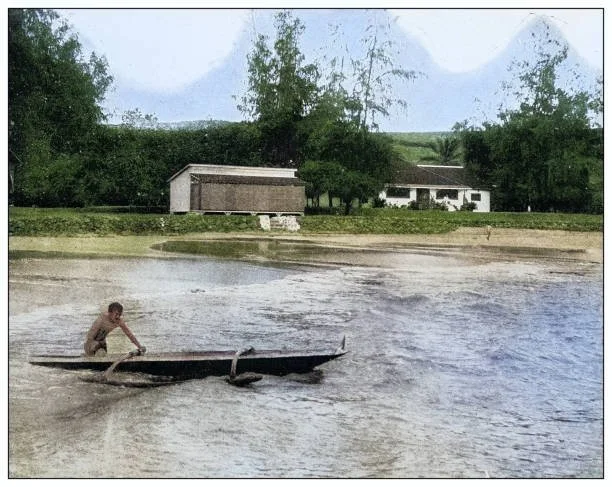
1880's Hawaiians in Outrigger Boats Waipi'o Valley Maui.
OGASAWARA ISLANDS
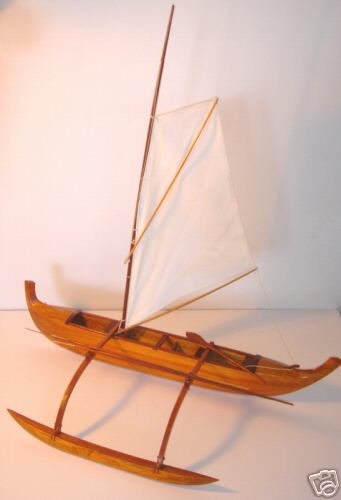
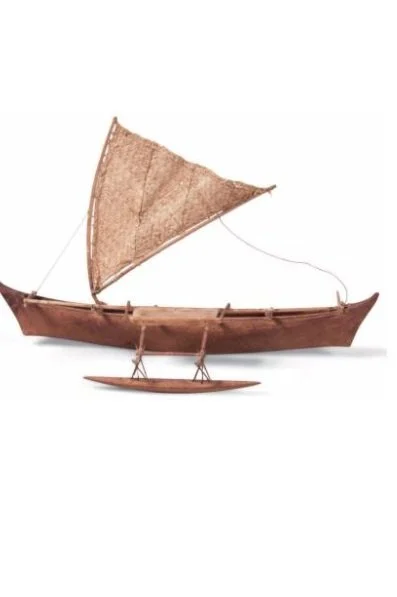
This model of an outrigger canoe, fitted with a European sprit sail, resembles closely that of Hawaiian fishing canoe, and this is the reason I included this model into the Category of Polynesian canoes.
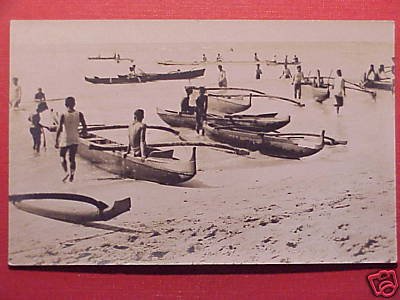
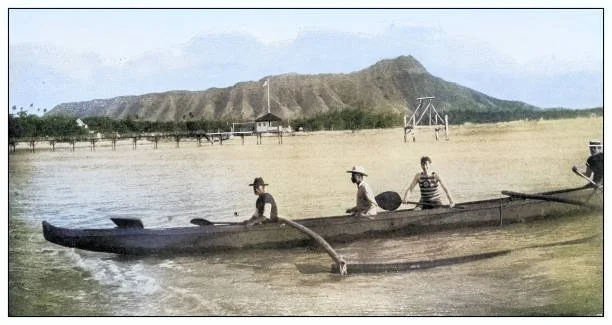
This is an early 20th-century photograph. Notice that the hulls of the canoes are darker than the tops. This difference in color may be due to the hulls being carved from Koa wood, while the gunnels and tops are made from a lighter-colored wood, such as Ahakea.
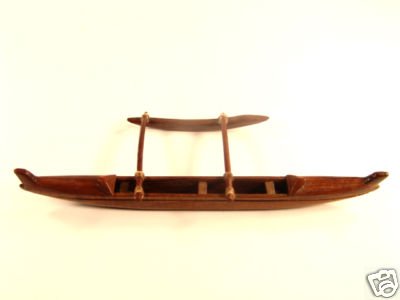
Small Hawaiian canoe model
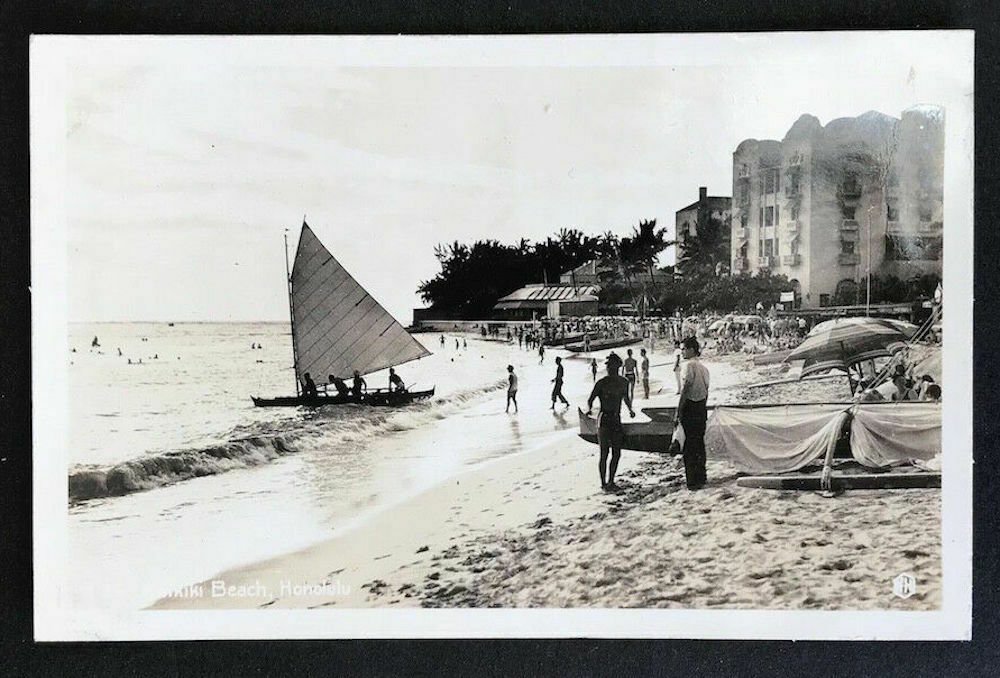
A picture daring back towards 1915 showing a Hawaiian outrigger canoe fitted with a sprit sail. The Royal Hawaiian Hotel in the distance
Small , old canoe model. Iakos and ama look to be on the wrong side.
Hawaiian double hull sailing canoe
HAWAIIAN FISHING CANOE
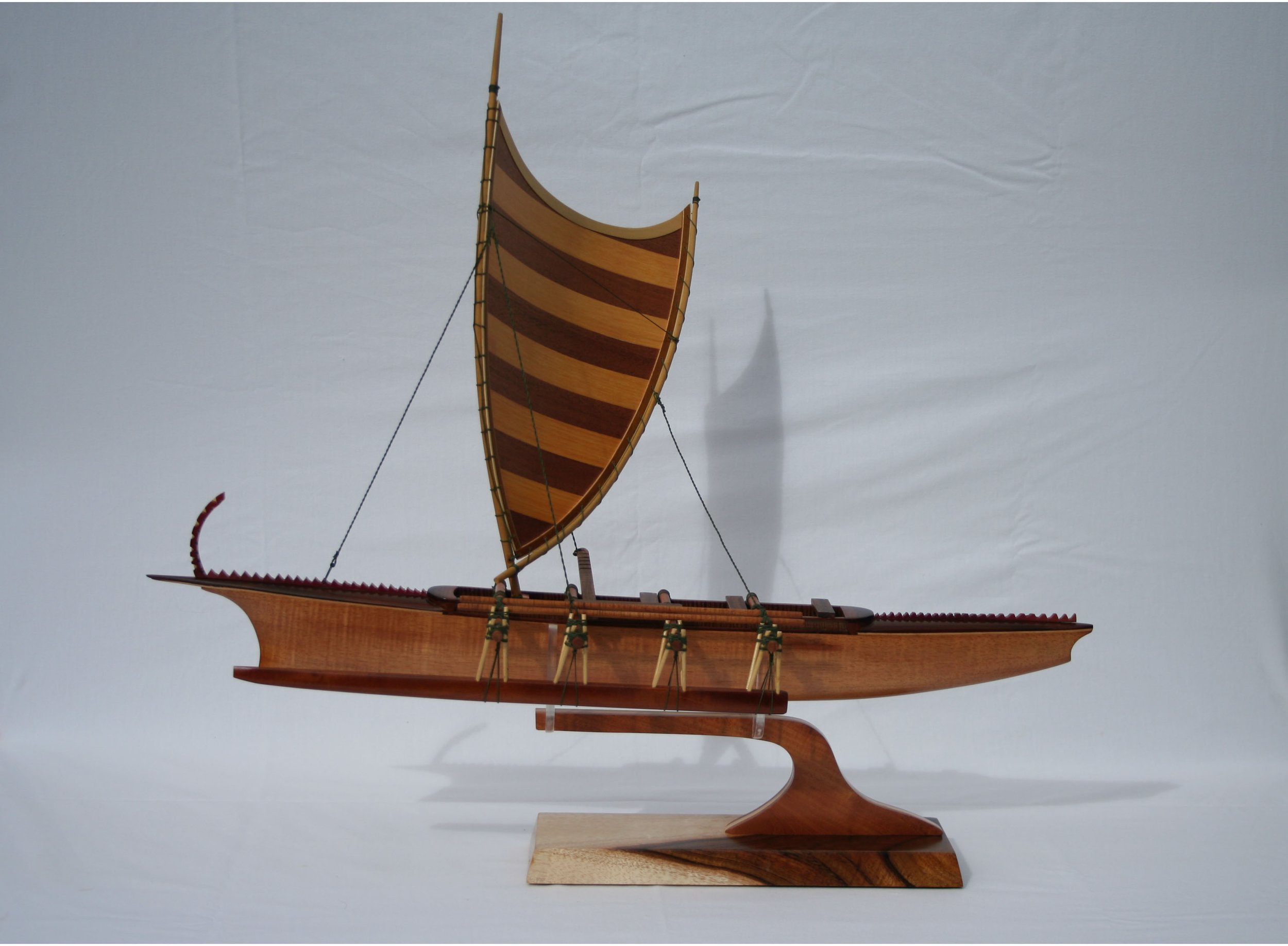
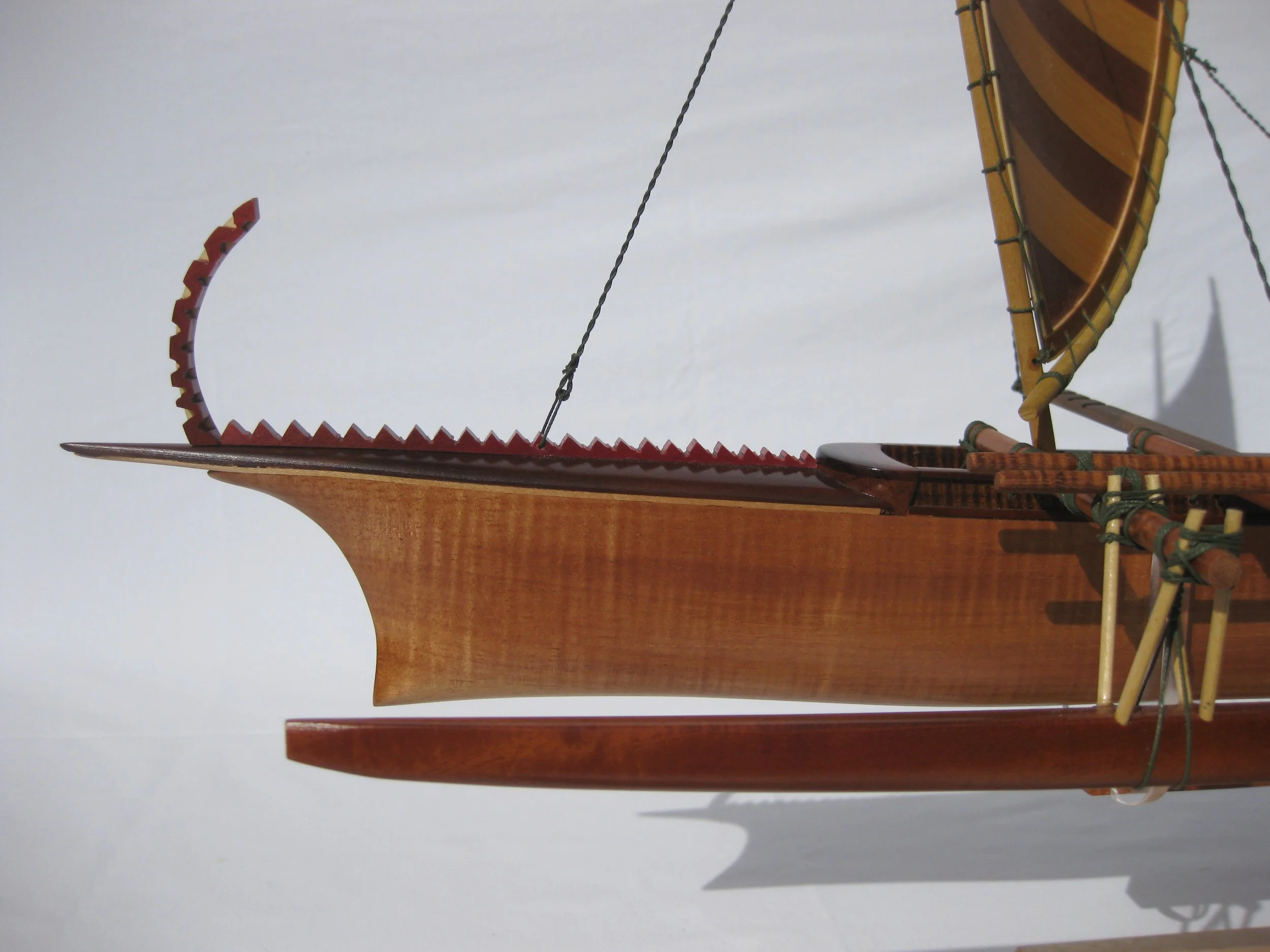
Hawaiian fishing canoe with striped sail I built in 2008 for the Kahala Hotel & Resort.
Hawaiian double-hull canoe with crab claw sail
Beautiful model canoe
Hawaiian model canoe
I created this model many years ago for a customer who wanted to use it as a decoration on his cruising boat.
This is an 18 inch long scale model of Hokule’a with striped sails I built 8 years ago for the Four Seasons Hotel Resort in Lana’i, Hawaii.
Scale model of Hokule’a with striped sails I built years ago to adorn the saloon of a yacht moored in Monaco.
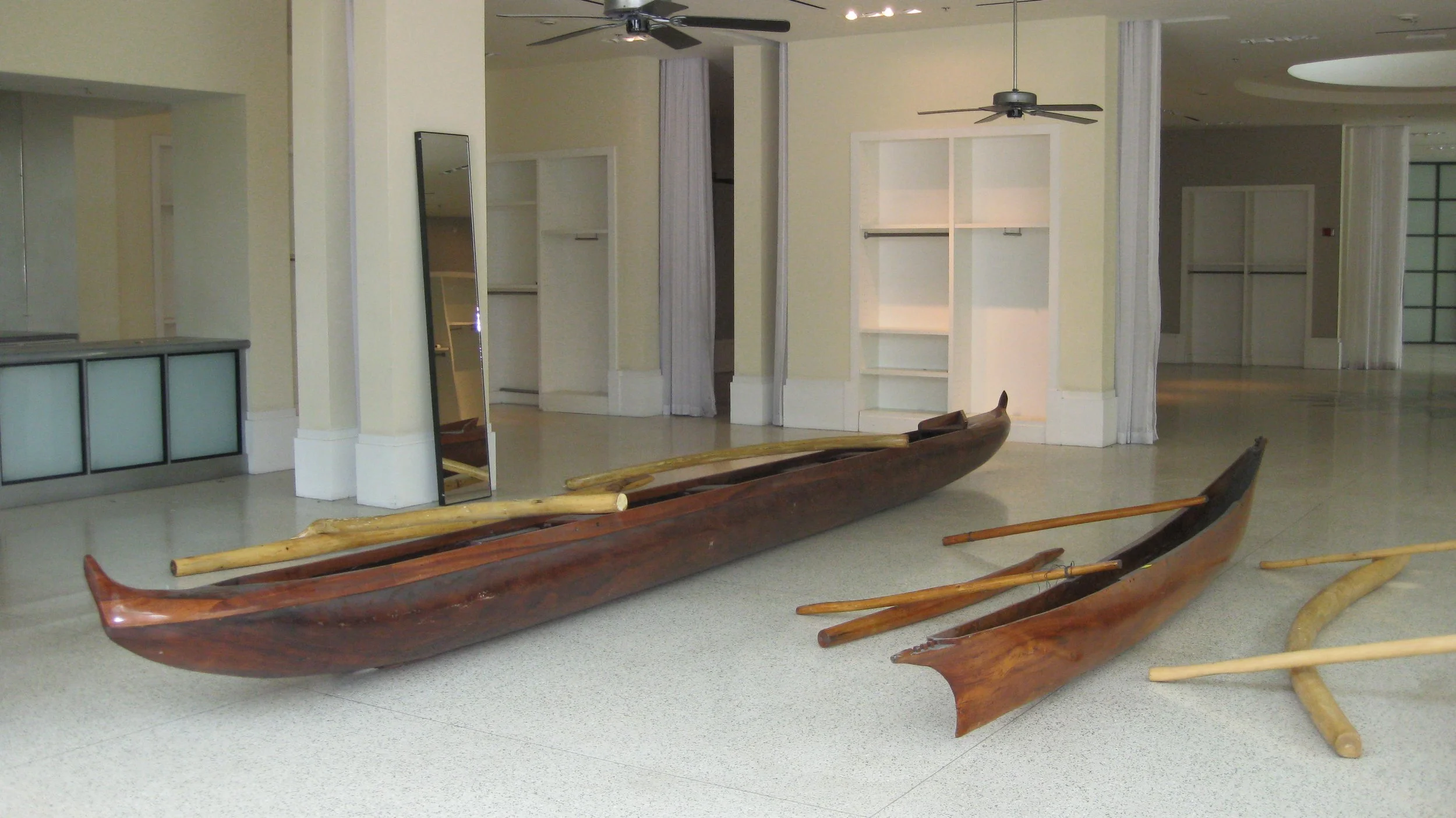
Those 2 canoes were auctioned off in Waikiki some years ago , one Hawaiian, the second Samoan.
Hawaiian outrigger canoe
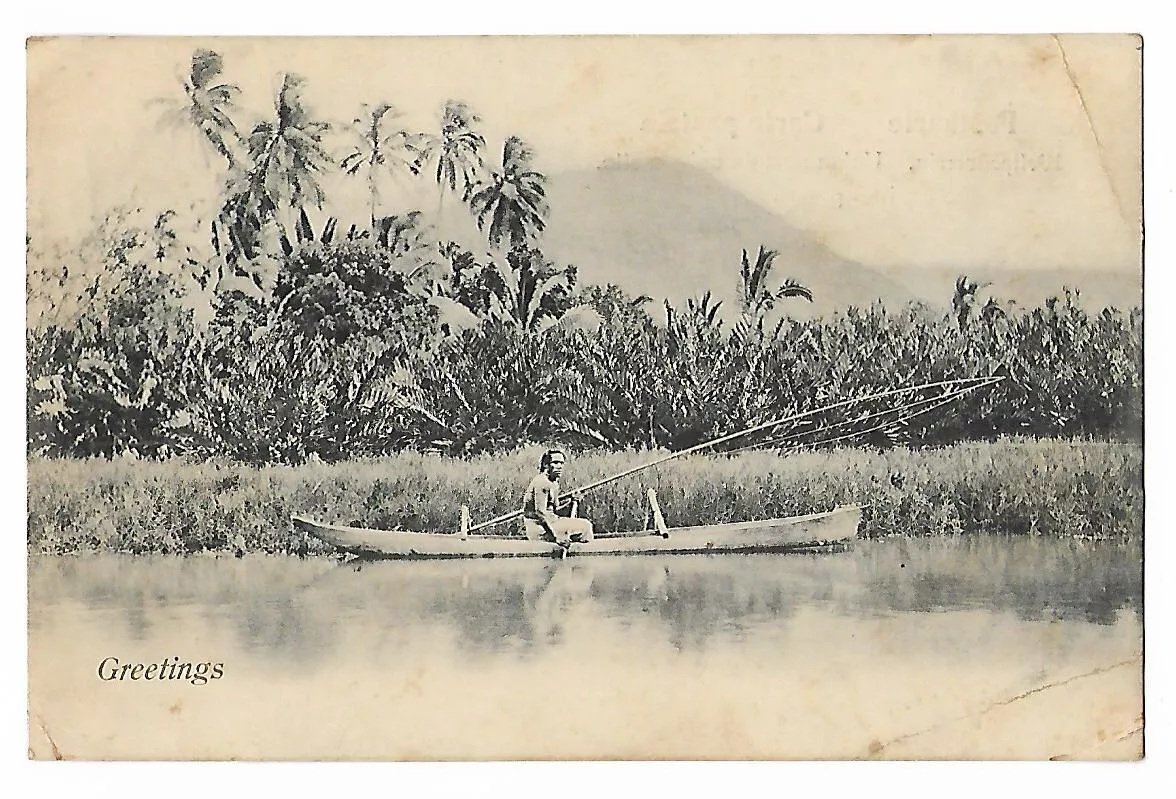
A beautiful old postcard showing canoes along the Waiakea river, Hilo, Hawaii.
Auctioned canoes in Honolulu, Hawaiian and Samoan
Showing a 12 inch long Hawaiian Fishing canoe model by F.P.
18 inch Opelu canoe with fishing spears by Francis Pimmel
A 12 inch long scale model of Hokule’a in its showcase. Built by F.P.
12 inch long scale model of Hokule’a .
An early postcard showing paddlers along the Honolulu Harbor.
Canoes of the Sandwich Islands, the rowers masked. A double canoe with an upright lateen sail holding nine rowers wearing gourd helmets, and one helmeted figure holding a carved idol. The shoreline in the background represents the north-west side of Kealakekua Bay. A drawing made by John Webber in the country visited by Captain James Cook in his first voyage 1768-1771.
British explorer Captain James Cook named the Hawaiian Islands the "Sandwich Islands" in 1778. He chose the name in honor of his patron, John Montagu, the 4th Earl of Sandwich, who served as the First Lord of the Admiralty and was the primary financial sponsor of Cook's voyages.
John Montagu, the Earl of Sandwich, is also the historical figure credited with popularizing the modern, portable meal in which meat is placed between two slices of bread, earning it the name "sandwich".
Native Hawaiian pushing his canoe onto the shore. Postcard ca 1910
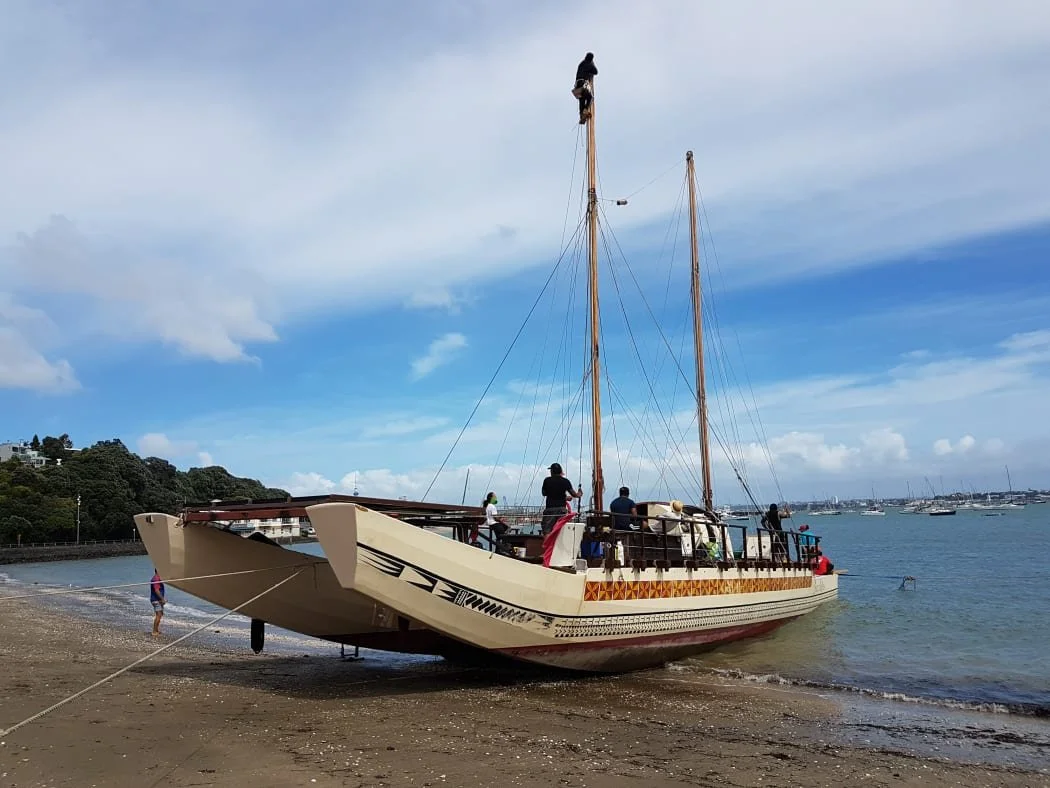
The Hawai’iloa voyaging canoe. In 1995, Hawaiʻiloa sailed her maiden voyage to Tahiti, Raʻiatea, and Nuku Hiva in the Marquesas Islands in company with Hōkūleʻa and a third canoe from Hawaiʻi called Makaliʻi together with two canoes from Rarotonga: Te ʻAu Tonga and Takitumu, and the canoe Te ʻAurere, from New Zealand.
Native Hawaiian coming to shore. Early 20th C. post card
https://worldwidevoyage.hokulea.com/vessels/hikianalia. Photo: The Orange County Register
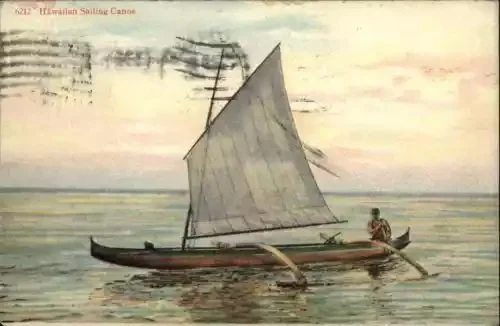
Hawaiian outrigger with sprit sail. Earl 20th C. post card
The Namahoe canoe in Kaui. Dreamstime photo.
Flying the ama. Early 20th C. photo.
The MO'OKIHA O PI’ILANI or The Secret of Pi’ilani. Maui
Mo‘okiha O Pi‘ilani is a 62′ wa‘akaulua, a large, double-hull transoceanic voyaging canoe that joins the likes of the Hōkūleʻaand Hikianalia. It was launched on July 11, 2014 at Mala Wharf, Lahaina after 18 years of construction lead by Hui O Wa‘a Kaulua with the help of thousands of volunteers from around the world. It was built to cross oceans manned by a crew that lives and studies the way of Polynesian voyaging, a unique form of navigation that depends not on sextants or compasses, but solely on elements of the spiritual and natural world. These included the sun, moon, stars, clouds, ocean currents, birds, and more. Often times, the navigator relied on a “gut feeling” that could only be acquired through years of experience on the canoe. MAUI OCEAN CENTER.
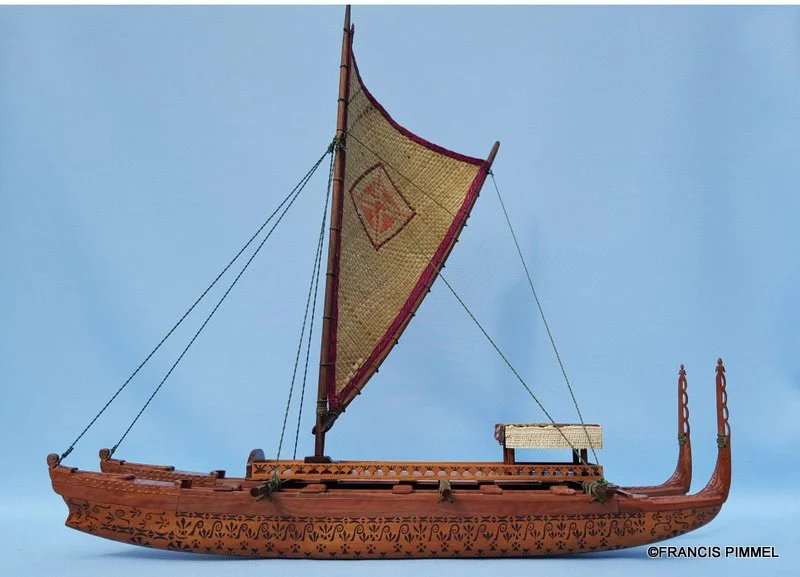
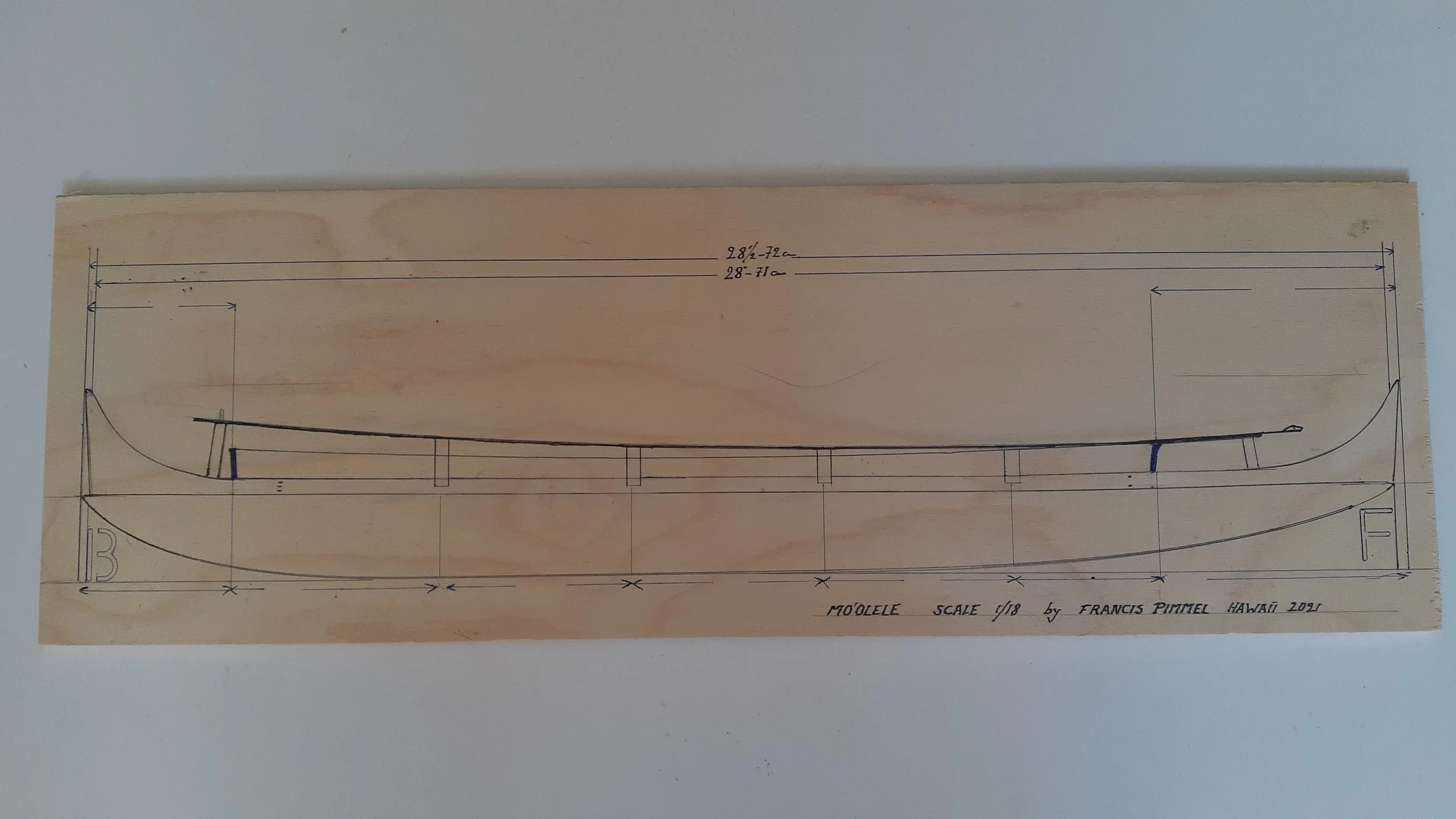
The Mo’olele or the Flying Lizard. I built this model some years ago using my own set of line drawings.
https://kawaiola.news/moomeheu/moolelo/remembering-moolele-o-lahaina/
Original 1920 photograph about Hawaiian canoes
1920 Postcard
MAKALI’I Voyaging canoe. Big Island
https://www.nakalaiwaa.org
Native on canoe, Makahuena, Kauai, Hawaii
HAWAII
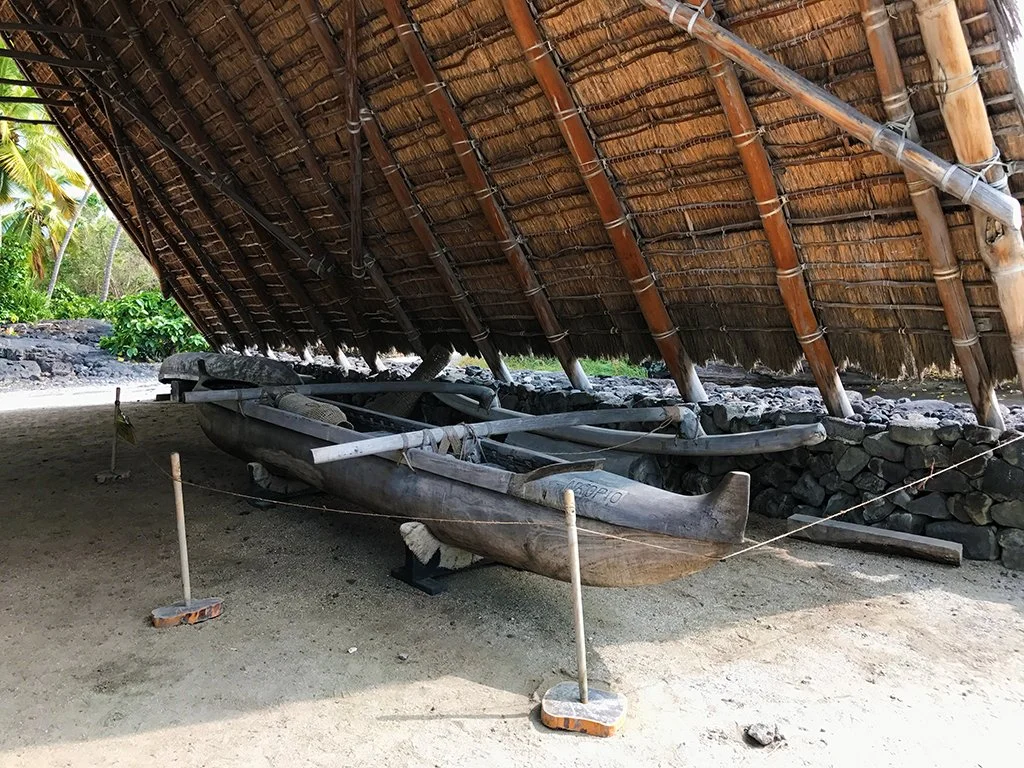
Showing the canoe below the halau, or hale wa’a. The halau is an open sided structure whereby the hale wa’a is a canoe house.
SAMOAN BONITO CANOE
I have always regarded this canoe, with its elegant lines, as one of the most beautiful Polynesian fishing canoes. It is not a dugout; it is entirely built from planks. This picture was taken in 1914.
Over the last six years, I have created two large-scale models of this vessel.
SAMOA
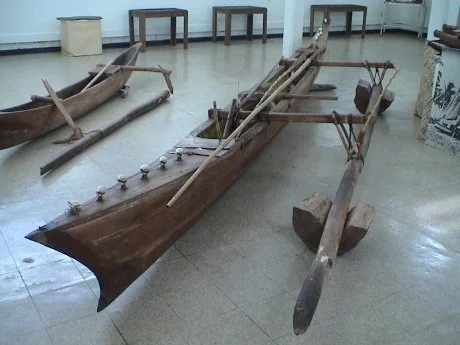
Samoan VA’AALO or bonito fishing canoe from the Te-Papa Tongarewa collections, Museum of New Zealand. The Va’aalo were entirely plank built.
Visit THE GALLERY to peruse a scale model I built a few years ago for a collector.
SAMOA
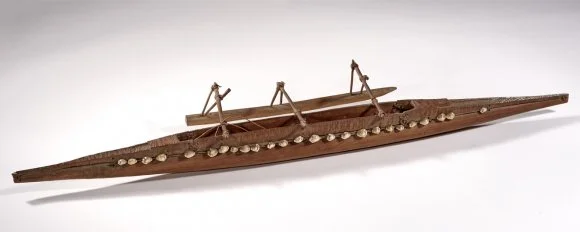
This is a model of a Samoan canoe of the type “Soatau” I made many years ago. Notice the curved figurhead on which cowry shells were tied.
Samoan bonito canoe
Several years ago, I created this very large scale model of the Samoan bonito canoe, entirely plank-built and crafted from Koa wood. This model is now displayed in the lobby of the Four Seasons Hotel Resort at Manale Bay, Lana'i, Hawaii.
SAMOA
Model of a four -boom sailing “soatau” I built many years ago. Notice the curved figurehead at the fore decking. Cowry shells used to be tied to the figurehead.
SAMOAN CANOE
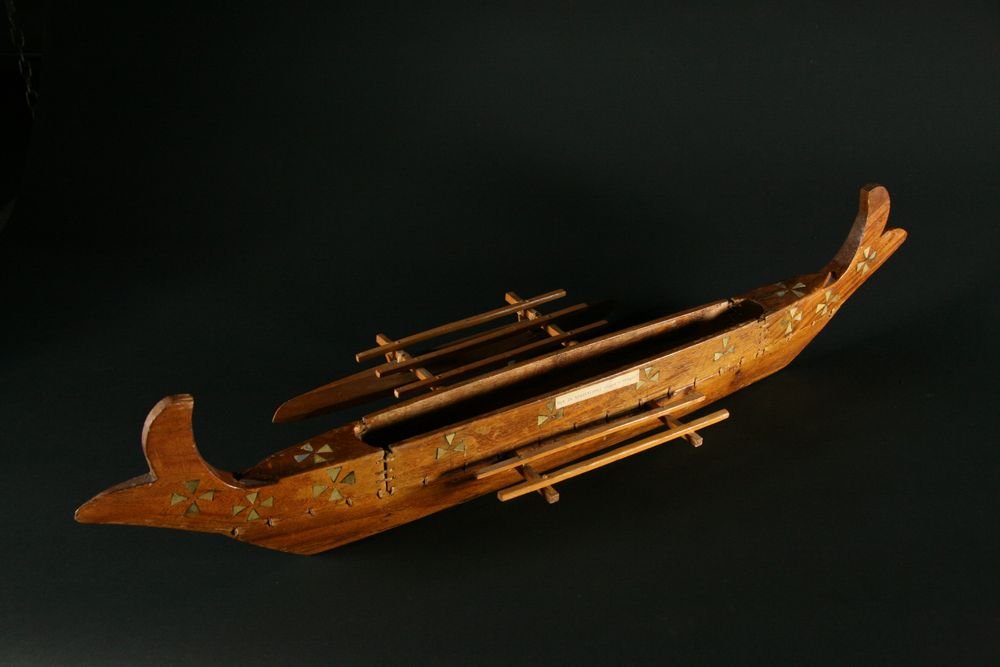
A Samoan canoe model in the Vatican Museums. The canoe has the shape of an “amatasi” type, whereby an amatasi is equipped with only 7 beams and not 8.
SAMOA
TE-PAPA COLLECTIONS. A va’a alo type Samoan fishing canoe model
SAMOA
Beautiful early 20c picture of a Samoan Va’aalo.
Samoan canoe
Model canoe replicating a type seen on the island of Tutuila.
SAMOA
A Samoan double hull voyaging canoe of the type “Alia”. It is the Samoan version of the Fiji Ndrua.
The Fiji Drua and Samoan 'Alia are essentially the same type of large, double-hulled voyaging canoe (also known as kalia in Tonga), representing the pinnacle of Pacific naval architecture, distinguished mainly by name and regional use, though both featured unequal hulls, Micronesian lateen sails, and the ability to "shunt" rather than tack for direction. The primary difference lies in their cultural context, with the 'Alia being Samoa's adaptation of the Fijian drua design, used for trade, exploration, and warfare, sometimes even carrying cannons
SAMOA
Te-Papa Collections. Samoan Va’aalo fishing canoe
SAMOA
Te-Papa Collections.
SAMOA
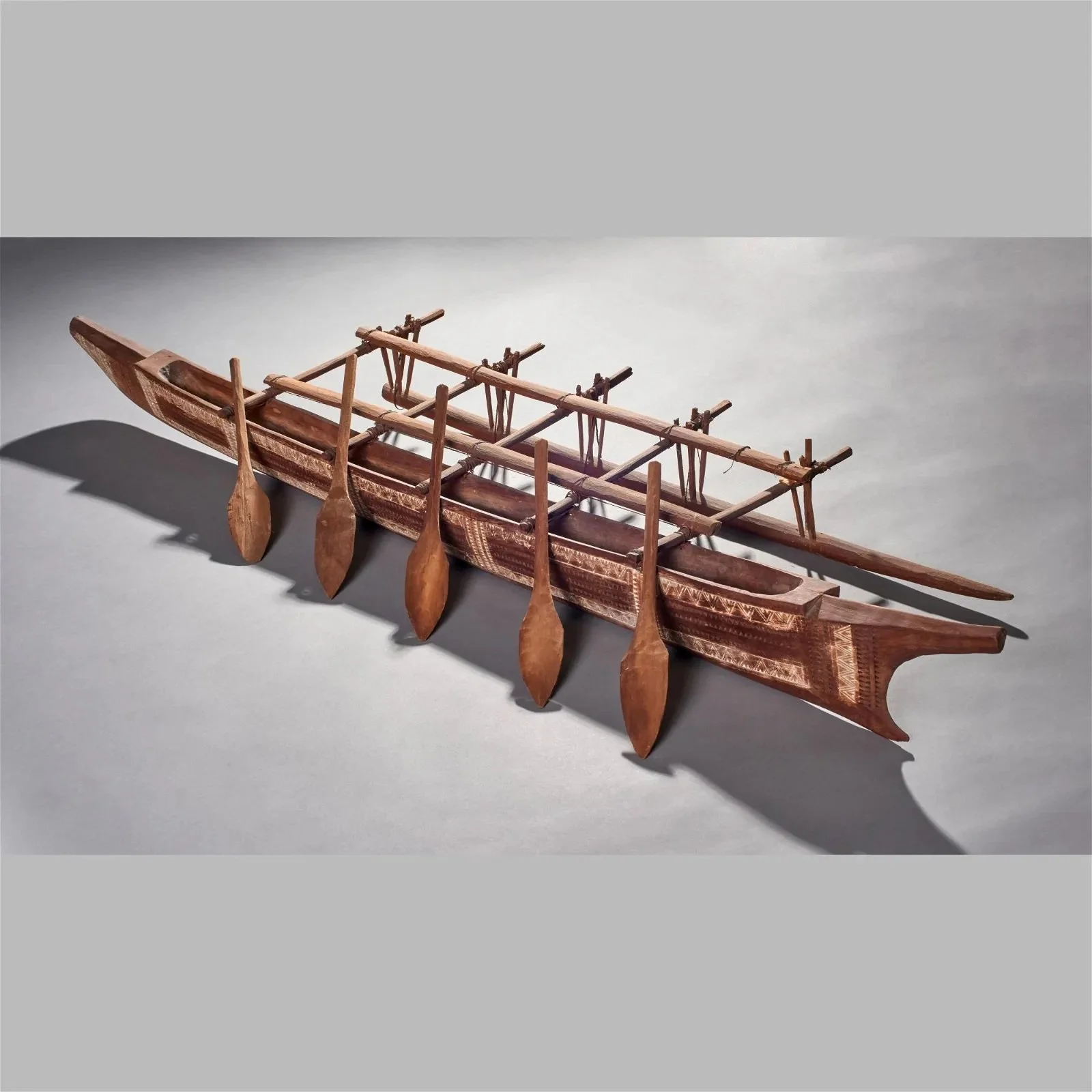
Small fishing canoe model of the type Va’a alo.
SAMOA
An early 20th Century postcard illustrating a Samoan Va’a alo fishing canoe.
SAMOA
Samoan canoe model
SAMOA
The Fautasi race . This is a traditional Samoan canoe race that takes place on Flag Day, a national holiday in American Samoan. The canoe is actually a derivative , in shape and form, from the early whaling boats. These boats were long and narrow, with sharp ends.
SAMOA
A Va’aalo canoe model in the collection of Francis Pimmel
SAMOA
Samoan Fisherman sitting in his Va’aalo canoe
SAMOA
A Va’a alo canoe on the left and a Tokelau fishing canoe vaka on the right.
SAMOA
Beautifully preserved va’a alo canoe.
SAMOA
A Va’a alo at display in the Tradewinds Hotel, Tutuila.
SAMOA
Native Samoan aboard a Va’a alo fishing canoe
SAMOA
A beautifully preserved Va’ a alo in the Tradewinds Hotel, Tituila, Samoa
SAMOA
Model canoe from the island of Tutuila
SAMOA
Va’a alo canoe model.
SAMOA
Samoan Voyaging canoe by Francis Pimmel. Property of the Four Seasons Hotel Resort, Lana'i. On display in the lobby of the Resort.
SAMOA
Samoan canoe of the type Kalia. Double-hulled canoes were introduced to Samoa in the 19th century due to Tongan influence. They are identical in every way to Tongan double-hulled canoes, which were themselves modeled after the Fijian Dru canoe. The picture is illustrating the famous Alia canoe RAMARAMA.
SAMOA
Samoan Paopao type model canoe.
SAMOAN
Va’a alo model canoe
SAMOA
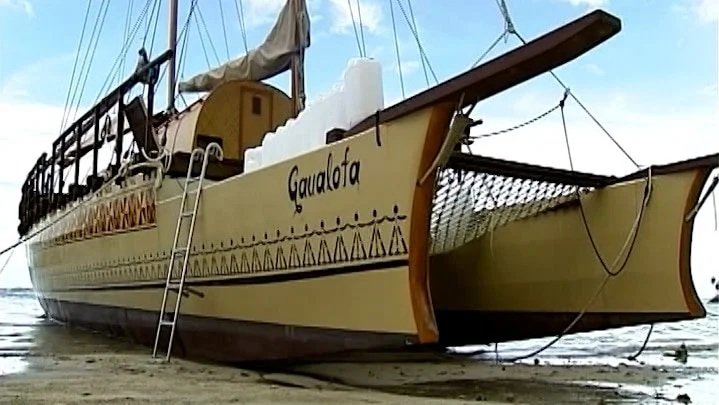
Gaualofa voyaging canoe
SAMOA
Samoan canoe model with 5 beams usually only to be seen on the “Iatolima” with sail.
SAMOA
The stern of the Gaualofa voyaging canoe
SAMOA
The bow of the Gaualofa voyaging canoe
SAMOA
Small Samoan va’a alo model canoe
COOK ISLANDS
Canoe in Rarotonga, Cook Islands. It has a front top very similar to those in Hawaii. Note the carvings along the hull.
COOK ISLANDS
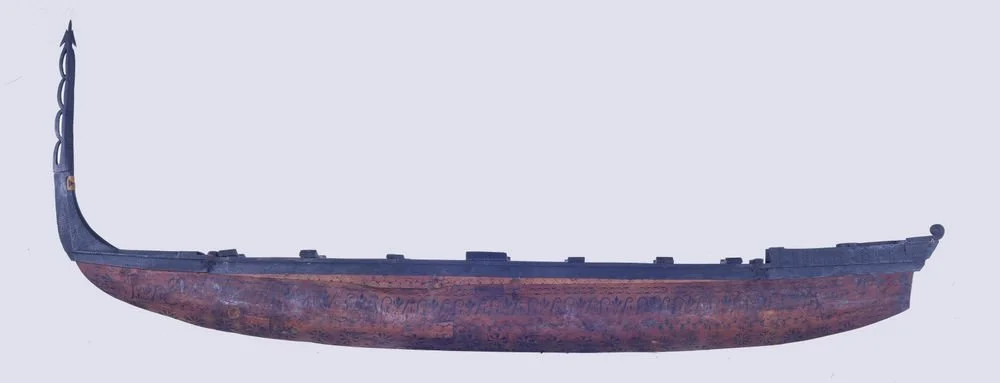
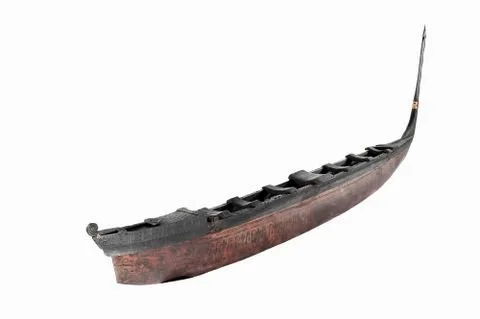
Te-Papa Collections. Cook islands canoe
COOK ISLANDS
A double-hulled Cook Island canoe, of which each hull is a scaled-down reconstruction of the single life-size hull in possession of the Te Papa museum of New Zealand.
COOK ISLANDS
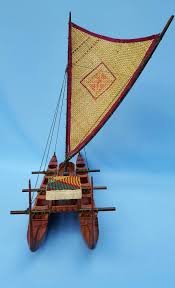
This is a small double-hull canoe from the island of Atiu. The small canoes of the Cook Islands share many similarities with Hawaiian fishing canoes, particularly in their shapes, which feature a raised stern and a lower bow piece, known as the manu, at the front. Most notably, the Cook Islanders used wood from the breadfruit tree to construct their canoes.
COOK ISLANDS
TePapa_Vaka-canoe Collection
COOK ISLANDS
A double hulled Cook Islands voyaging canoe model built by Francis Pimmel some years ago. Now in private collection.
Cook island canoe
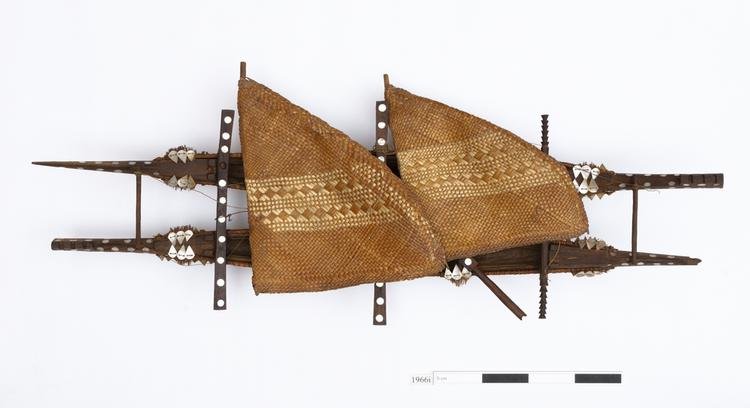
Top view of the “Manihiki” canoe model at the Horniman Museum, London
COOK ISLANDS
Te Papa_Vaka-canoe-Auau Collection
COOK ISLAND
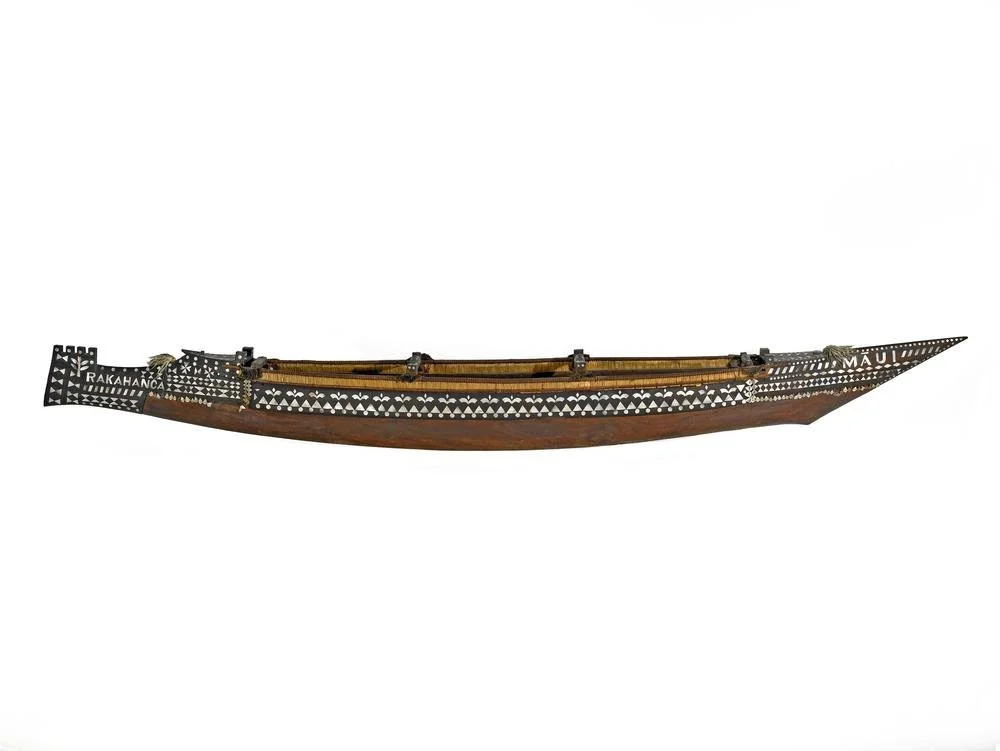
Manihiki canoe, 4.68 meter long, 61 cm wide. Illustrated in Hadden and Hornell, “Canoes of Oceania”, p. 177-8, figs. 113 and 114.
This appears to be the canoe purchased by the British Museum in 1907. A letter from Capt. Percy Atkin (in the Department of Prehistory and Europe) dated 20 July 1907 says: “The canoe was made by the people of Rakahanga…it is built of the only three woods grown in the island.
MANIHIKI , Cook Islands
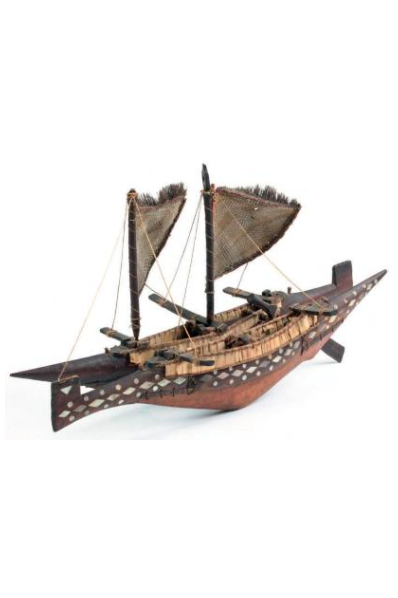
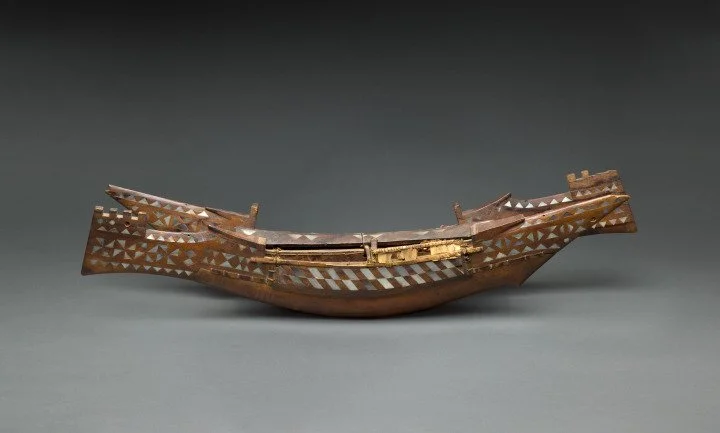
This particular model of a Manihiki canoe from the Cook Islands is at the Horniman Museum, London. I know of 4 more models, one at the Scottish Royal Museum, one at the Peabody Museum, Salem , the third at Te Papa Colletions,, NZ., and finally the forth at the Vatican Museums which I have visited in May 2025.
Cook island canoe
Side view of the “Manihiki” canoe model
Cook Island
Front view of the Manihiki canoe model at the Horniman Museum, London.
COOK ISLANDS
Canoe model, Manihiki Atoll
COOK MANIHIKI
Manihiki atoll model canoe. 6 7/8 × 35 inches. Saint Louis Art Museum, Gift of Morton D.
COOK ISLANDS
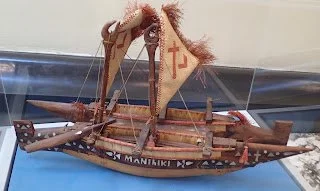
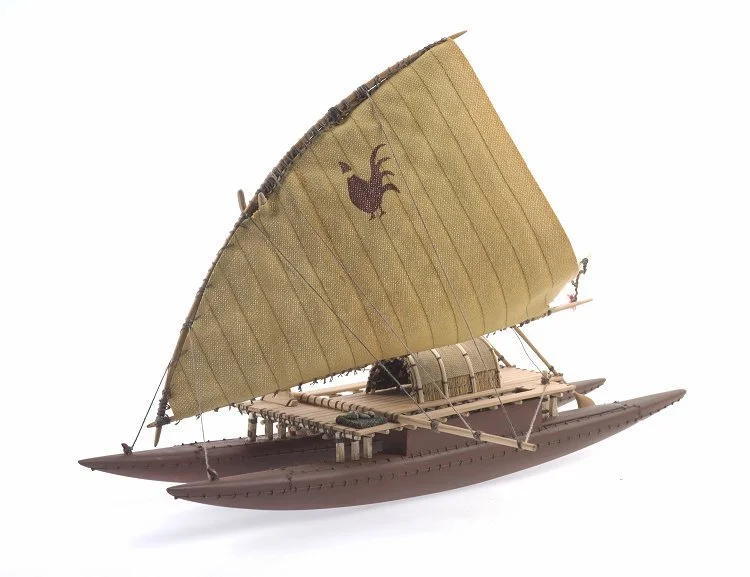
Manihiki canoe model , Vatican Collection. Notice the cross in the sail. It is actually labelled as a Tahitian canoe in the Vatican Museum.
COOK ISLANDS
The Te-Au-O-Tonga, anchored in the Tahitian capital Papeete
PUKAPUKA
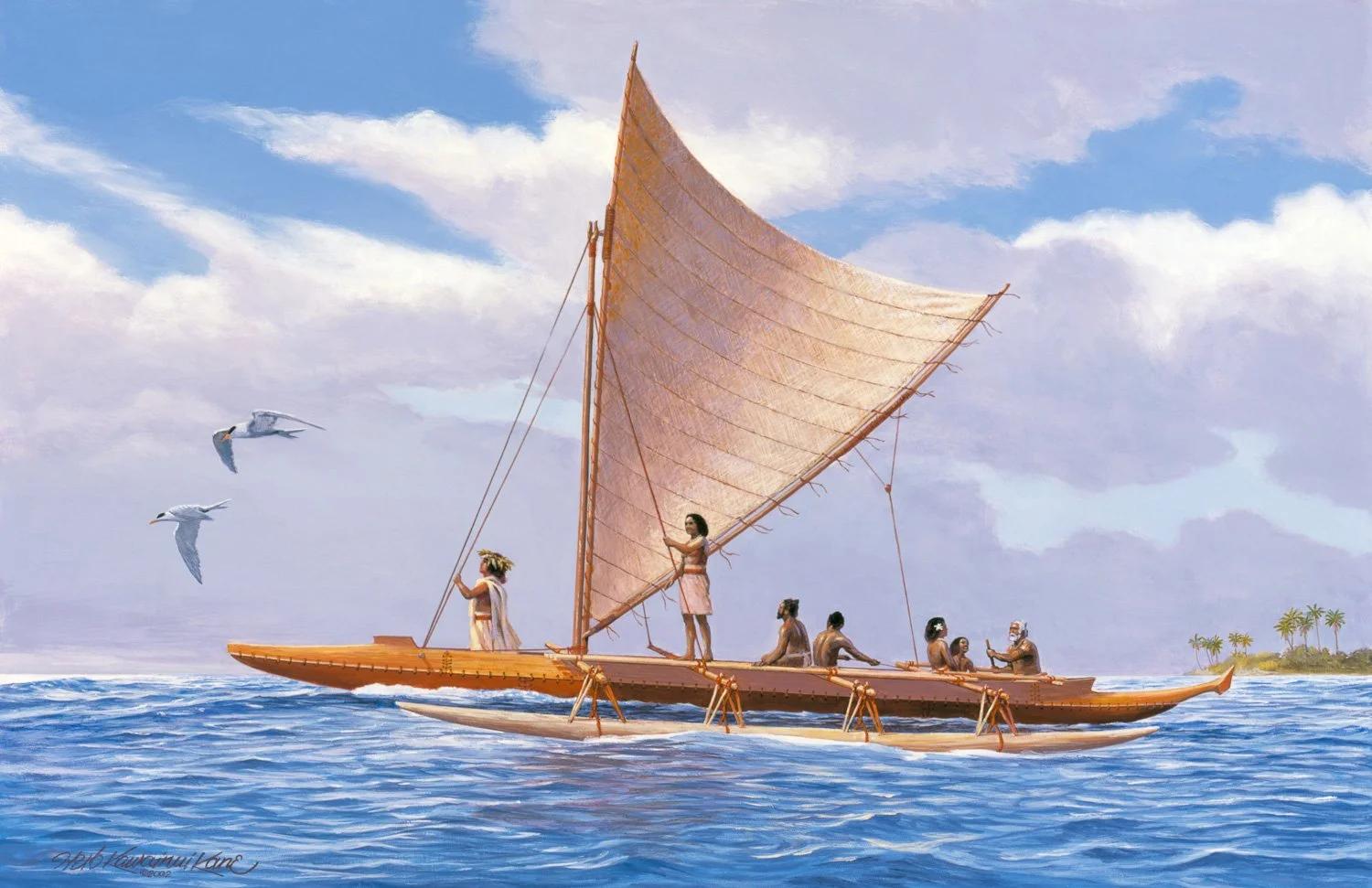
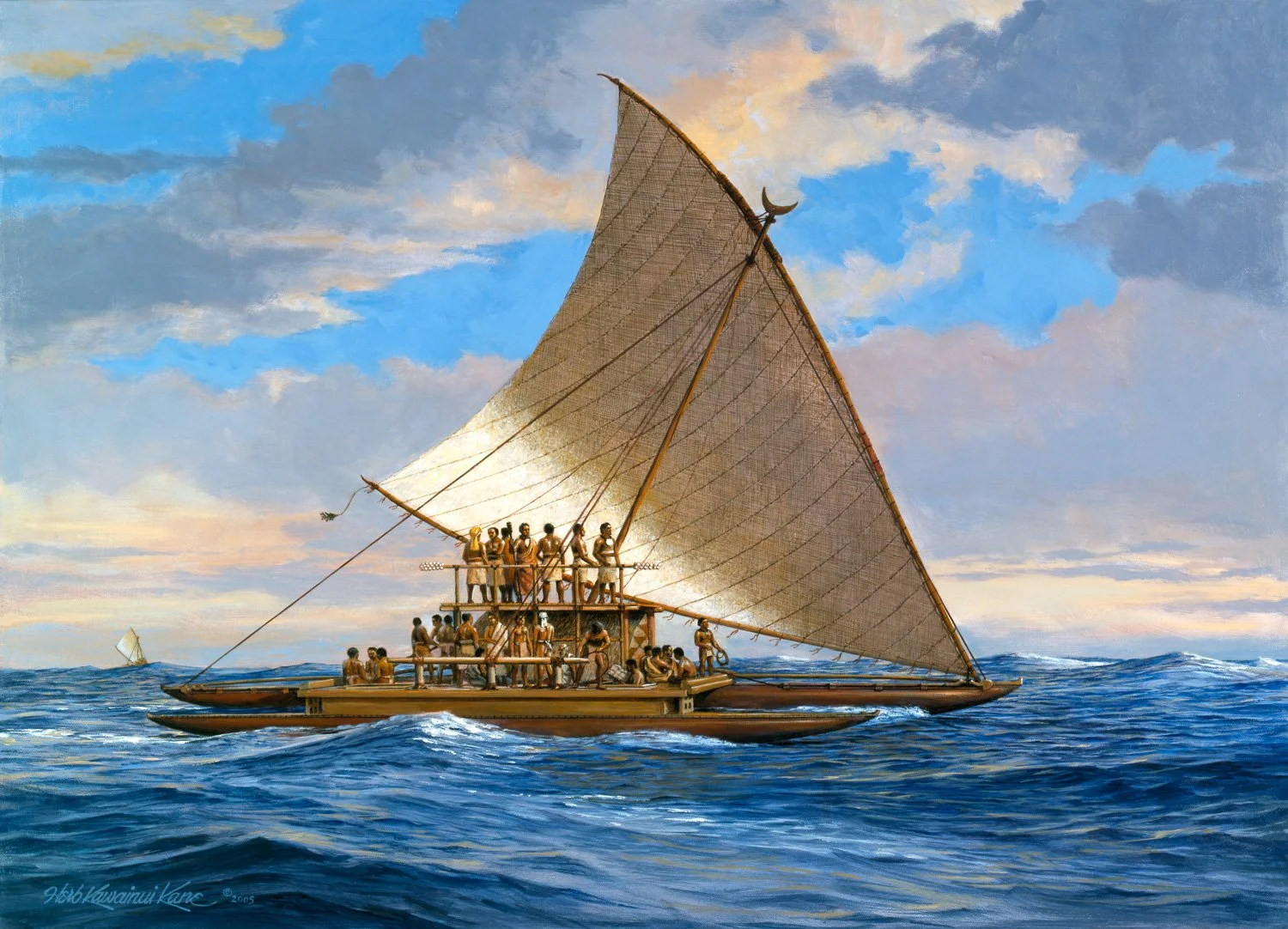
Pukapuka sailing canoe by Herb Kawainui Kane
COOK ISLANDS
MAIRE NUI VOYAGING CANOE
In 1992, vaka building and voyaging experienced a resurgence in the Cook Islands when the country hosted the sixth Festival of Pacific Arts. Many southern group islands built vaka and sailed them to Rarotonga for the opening of the festival in October 1992.
The Mauke canoe, Maire Nui, is pictured above under sail in an atmospheric photograph by Ewan Smith.
On its 240km journey from Mauke it broke a boom, which halved the speed of travel to about 4 knots, but the boat arrived safely with a happy, although exhausted crew.
After the festival the Maire Nui languished in a tin shed at the old Kia Orana Food Factory until the government property corporation decided it needed the shed for other purposes. The vaka, by now somewhat dilapidated was moved outside.
The library and Mr T (Tetini Pekepo) wanted to build a lean-to in the library’s garden area and teach local youth to renovate and then sail the boat, but no funding was available. Maire Nui was relocated to Mr T’s property where he works on it when he has time.
Cook Islands Voyaging Society.
COOK ISLANDS
MARUMARU ATUA.
NEW-ZEALAND
A crowd admiring a Maori war canoe. An illustration dated 1866
1880 NEW-ZEALAND WAR CANOE
A picture dated 1880 showing a Maori war canoe of the type “Waka Pitau”.
Maori war canoe
New-Zealand
NEW-ZEALAND
Auckland Harbor Regatta by Frederick Rice Stack ( steel engraving)
NEW-ZEALAND
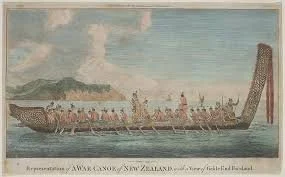
New-Zealand Maori war canoe “waka-taua” by James-Cook, copper engraving 1774, but hand colored at a later date.
NEW-ZEALAND
An illustration by by Dumont D'Urville 1841, showing Maori canoes of the type “Waka Tete” or fishing canoes approaching a sailing ship.
NEW-ZEALAND
Māori war canoe (steel engraving)
NEW-ZEALAND
A Maori war canoe by Parkinson Sydney.
MAORI
1830 steel engraving of a Maori war canoe.
NEW-ZEALAND
Historical lithograph titled “Vue du Cap Wangari, Nouvelle Zelande, depicting a view of Cape Wangatrei in the Bay of Islands, New-Zealand, with Maoris rowing a war canoe.
NEW-ZEALAND WAR CANOE
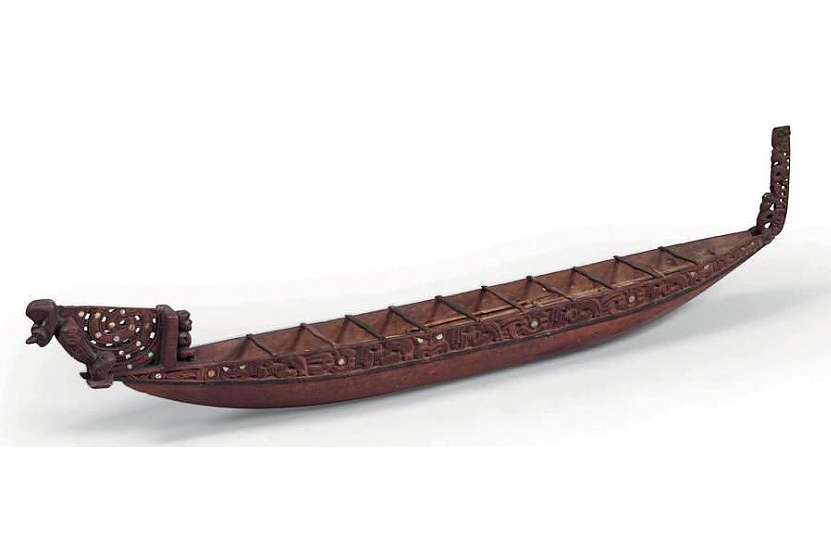
A “waka Taua” canoe model created by Volker Thomas. L: 230 cm, L: 90.6 inch
NEW-ZEALAND
This is a “waka tete”, a Maori fishing canoe . The figurehead at the bow of the canoe is a rudely carved representation of a human face sticking out the tongue. The representation of a human body is sitting at the stern of the canoe.
NEW-ZEALAND WAR CANOE
Showing the ornamental carved stern of the canoe or “Tau-rapa”
NEW-ZEALAND WAR CANOE
Showing the ornamental bow of the canoe or “ Tau-ihu”
Maori
Pirogue de guerre Wangari, New-Zealand
Wangari war canoe model
NEW-ZEALAND
A waka pitau from New Zealand. Te-papa Museum.
NEW-ZEALAND
A beautiful 52 inch long model of a Maori war canoe built towards 1835.
Te Papa - voyaging canoe of Kupe the Explorer.
In Māori tradition, Kupe, a legendary explorer, is said to have discovered New Zealand using his voyaging canoe, the Matawhaorua. Kupe, with his wife, family, and crew, traveled from their ancestral homeland of Hawaiki, using stars and ocean currents for navigation. The Matawhaorua was a double-hulled canoe, also known as a waka hourua. The above illustrated canoe is actually a Tahitian Tipairua.
It is strange to me why the Tapa Tongarewa Museum is using a Tipairua canoe as an example of how the Matawhaorua may have looked.
NEW-ZEALAND
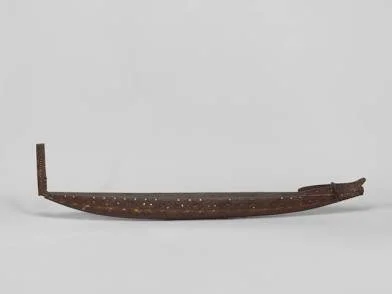
Maquette de bateau, Pirogue de la baie de Charaka, Nouvelle-Zélande
NEW-ZEALAND
Natives carrying a canoe into the sea. A ship can be seen in the distance. B.L.
NEW-ZEALAND
Kororareka as painted by Augustus Earle
NEW-ZEALAND
Haunui voyaging canoe
NEW-ZEALAND
Two Maoris standing by the elevated sternpost or “TAURAPA” of a WAKA TAUA in 1842.. Artist/creator: Sinclair, Alexander; Clarke, Cuthbert; Merrett, J. British Library
NEW-ZEALAND
Traditional Maori waka Haunui, double-hulled canoe in the Te-Papa Tongarewa Museum, Wellington, New-Zealand. Illustration by Pierre André Leclercq.
THE PAPA COLLECTIONS
The Waka hourua “Te Aurere Iti” is a voyaging canoe model replicating the “TeAurere”which sailed to Rarotonga in 1992 and to Tahiti and Hawaii in 1995. The canoe was moored at Pier 41 in 1995. It is important to mention Sir Hector Busby when it is about Te Aurere,
NEW-ZEALAND
New Zealand War Canoe. Waka Taua, Maori James Cook Print 1774. Original engraving in black and white.
NEW-ZEALAND
Te Aurere canoe
NEW-ZEALAND
Nouvelle Zélande. Pilogue de l anse de l'Astrolabe. (Baie tasman.), Pirogue du canal de l'Astrolabe.
By Dumont d'Urville, Jules-Sébastien-César, 1790-1842 (Author)
From the collections “Voyage de la corvette l'Astrolabe exécuté par ordre du roi: pendant les années 1826-1827-1828-1829”
Who was Jules Dumont D’Urville ?
NEW-ZEALAND
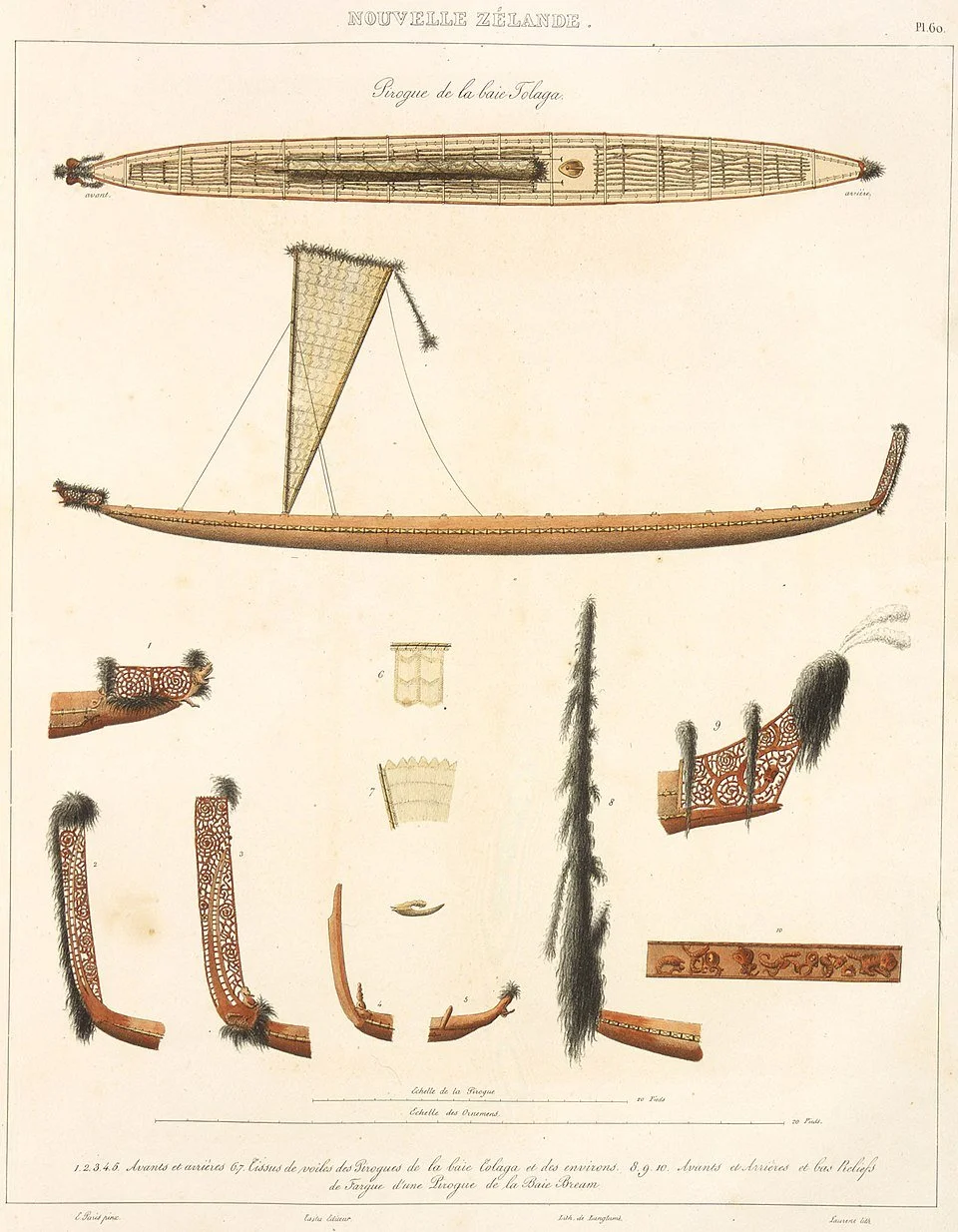
A plate containing details of canoes of Tolaga and Bream Bays, New Zealand, including whole views from above and the side, showing a triangular sail, a close-up of a sail, carvings from sterns and prows.
In Dumont d'Urville, Jules Sebastien Cesar, 1790-1842: Voyage de la corvette l'Astrolabe execute pendant les annees 1826, 1827, 1828 et 1829. Atlas historique. Paris, Tastu, 1833.
NEW-ZEALAND
A waka Taua or war canoe model, late 19thC, 18.5 × 7.5 × 76 inches. Saint Louis Art Museum
NEW-ZEALAND
Titled 'View of Charlotte sound in New Zealand, by Clevely and Jukes.' in the Catalogue of Maps, Prints, Drawings, etc, forming the geographical and topographical collection attached to the Library of his late Majesty King George the third, etc, London, 1829 ; View of Queen Charlotte sound, two large crowded British ships at anchor in the calm bay with several boats and outrigger canoes on the water, longhouses and canoes on the shore amongst palms and other exotic trees, an officer amongst a group of Maori to the right foreground with a sailor saluting and two others folding a sail and another seated on the hillock to the right, a group of Maori working on a canoe to the left ; part of a series of South Seas views, published by Thomas Martyn. British Library
MARQUESAS
MARQUESAN CANOE hull ornamented with incised patterns as shown in this model. The fore end piece is often carved with a human face whereby the end piece is bearing a recumbent tiki figure.
NEW-ZEALAND
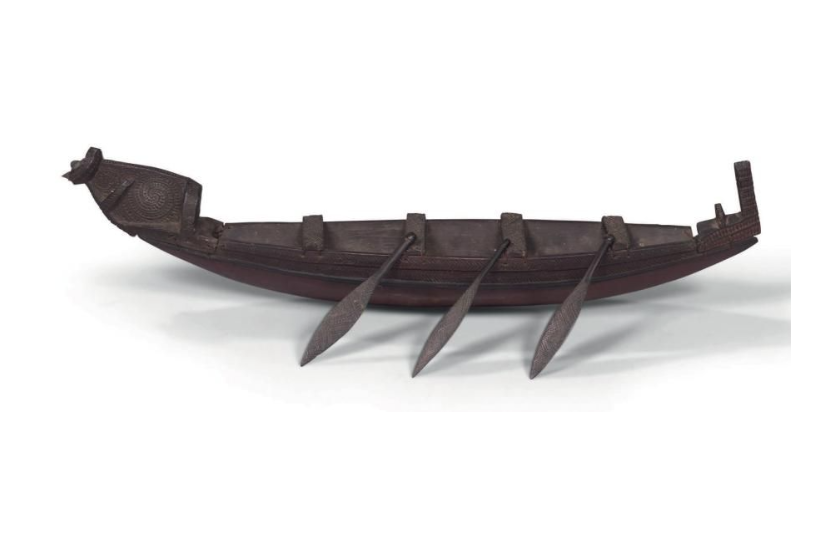
19 C canoe model
Marquesan canoe
The models is graced with a tiki standing at the stern of the model. I was commissioned to build some identical models for The Four Seasons Hotel Resort Suites, Lana’i, Hawaii.
MARQUESAS
A 38 inch long model of a double-hulled Marquesan Voyaging canoe built by Francis Pimmel.
Marquesas
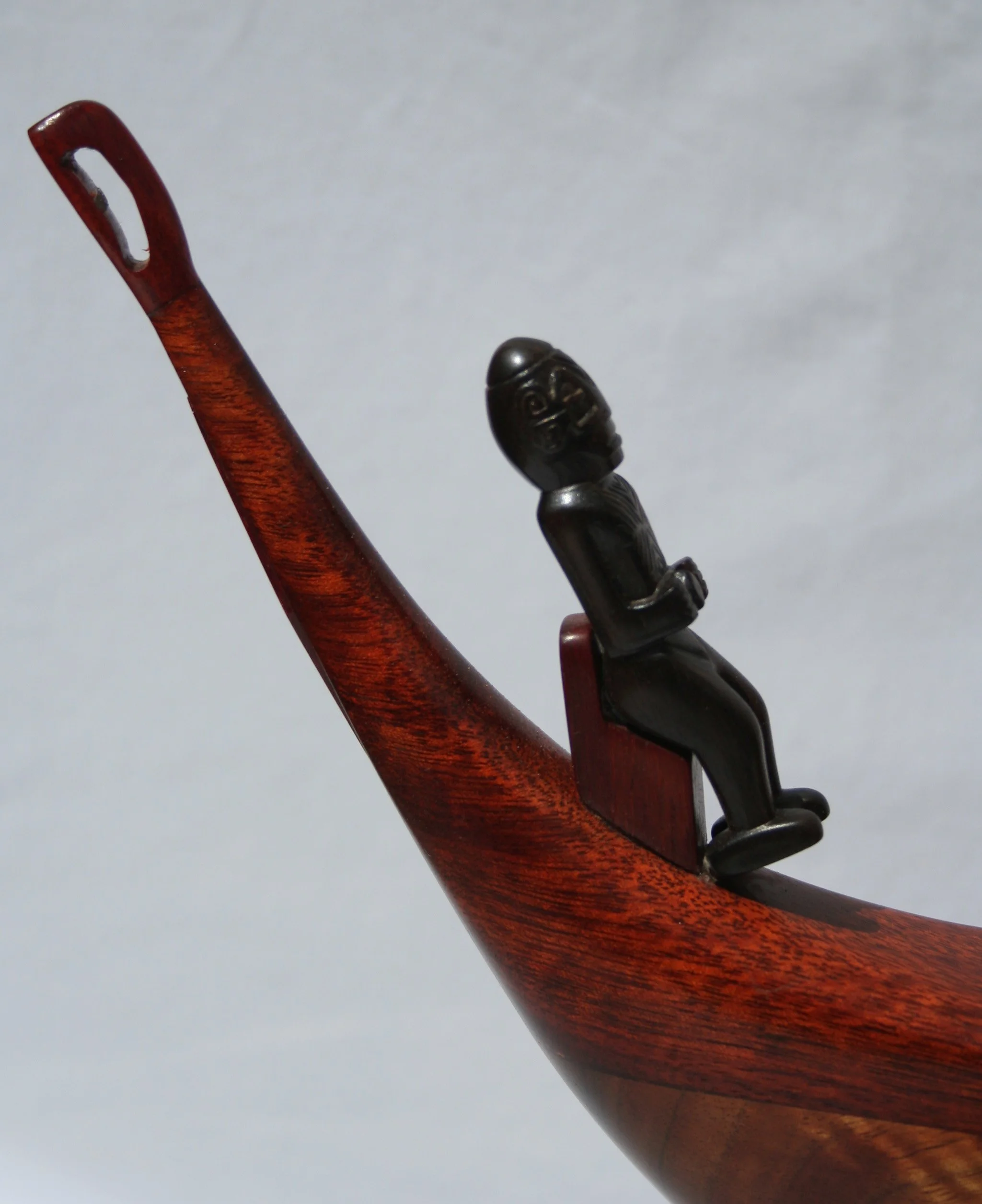
A carved tiki sitting at the stern of one of my models.
MARQUESAS
The remains of a double-hulled Marquesan canoe in 1910
MARQUESAS
Single hull Marquesan canoe model by Francis Pimmel
NIUE ISLAND
Miniature de pirogue à balancier de Niue MNM
NIUE ISLAND
Te Papa collections. The shape of the Niu island canoes is similar to the one of Tuvalu
NIUE ISLAND
Niue Island Polynesia, 19eme siecle, 21 inches long
NIUE ISLAND
Formerly Savage Island. 19C model. 25 inches long.
TAHITI
An entirely planked Tipairua canoe model built by the author. The model now belongs to a large private canoe collection in Los Angeles
TAHITI
Tahitian fishing canoe equipped with a sprit sail.
TAHITI
Small fishing canoe of the type “ Pu Hoe”
TAHITI
Early 20th Century postcard showing outrigger canoe with sprit sail.
SOCIETY ISLANDS
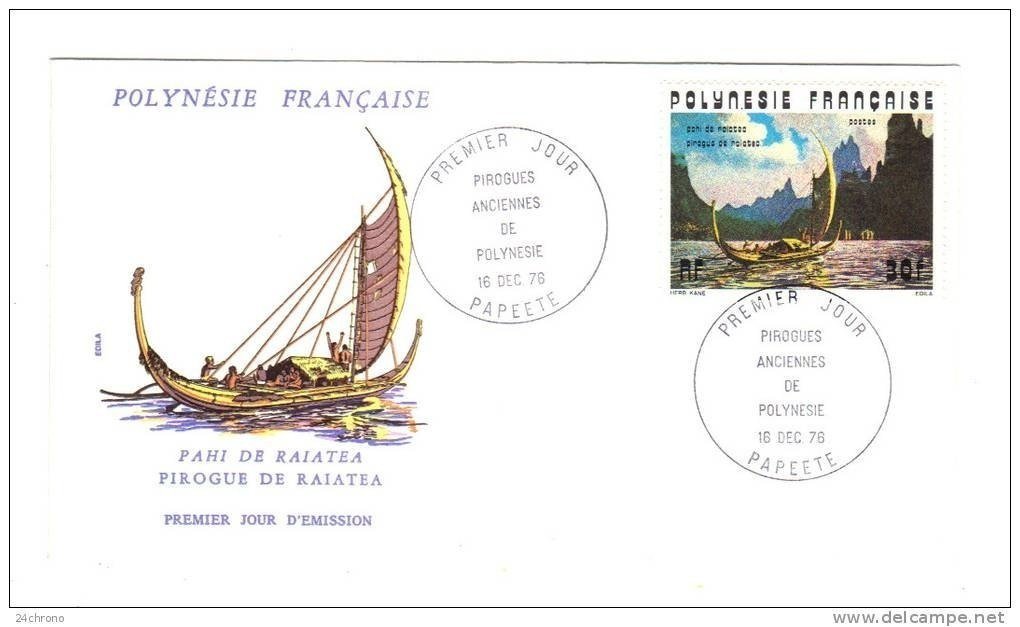
A First-day cover ( 16 December 1976) issued in Papeete showing a Raiatea canoe.
TAHITI-OTAHEITE
A Sailing Canoe of Otaheite by John Webber. Published in 1792. Four figures in a boat, two rowing in the stern, a woman standing at the mast, to which is secured a tall, narrow sail with a long tassel flying from the top, with another ship in the background to right, near a mountain.
TAHITI
Otaheite canoe. Sketches and colored drawings made by J. Webber, during Captain Cook's third voyage, in 1776-1780,
TAHITI
Society islands. “A view of the islands of Otaheite with several vessels of that nation.” Sketch drawn during Capt. Cook first voyage. Engraved by E. Rooker.
TAHITI
The island of Otahiete bearing S.E. distant one league. Painted by William Hodges and engraved by W. Watts. In the foreground, two double canoes, one with a cabin. Several other sailing vessels in the bay.
TAHITI
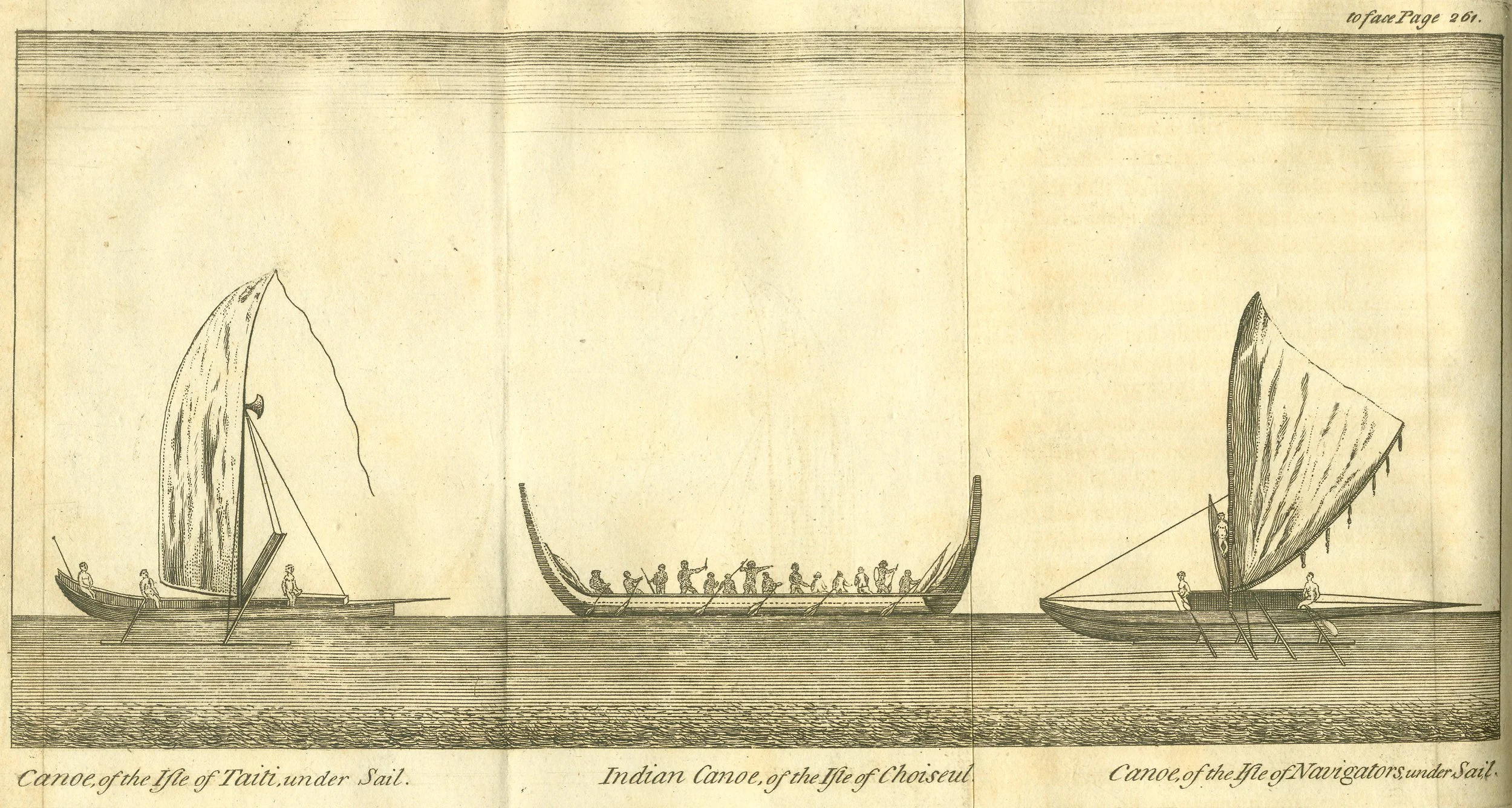
Illustration of three different Pacific canoe style observed by Bougainville at: Tahiti, Choiseul (one of Solomon Islands) and Navigators Islands (Samoa). 1771
TAHITI
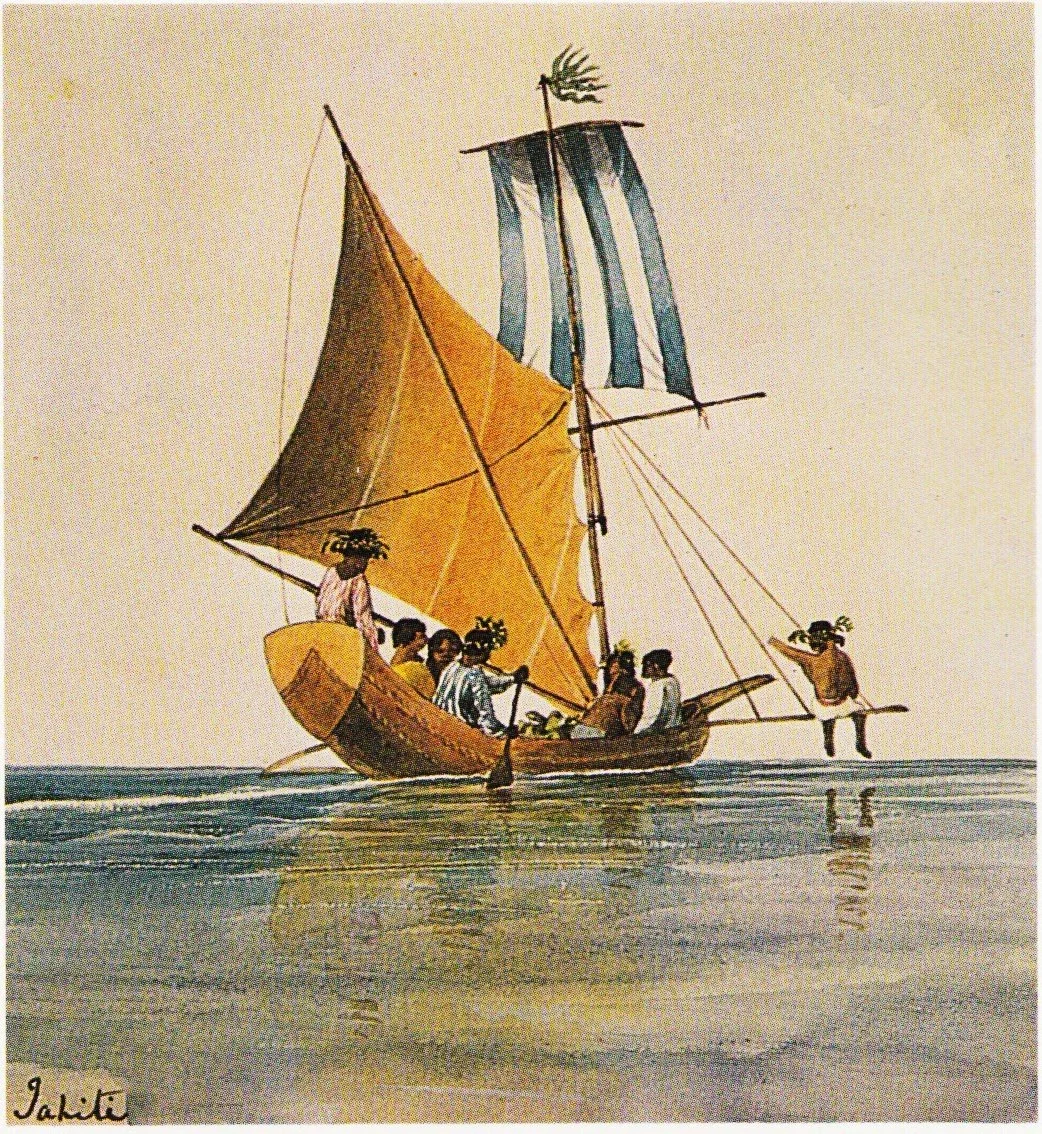
This is another watercolor by Capt. Henry Byam Martin, drawn around 1846-47.
The raised stern of this vessel must have inspired the builders of Hikianalia and those other identical double-hulled contemporary voyaging canoes.
TONGA
A very large “Kalia” type canoe which is the Tongan adaptation of the drua or double-hulled Fijian voyaging canoe.
TONGA
The Tongan Kalia
TONGA
A beautiful model of the ancient double hulled Tongan voyaging canoe “TONGIAKI’. This type canoe was very similar to the Samoan “Va’a tele” and the Fiji Drua.
TONGA
A top view of the "Tongiaki" canoe model highlights its similarities with the Fijian drua.
TONGA
Maquette de bateau, Vaca, pirogue à balancier des îles Tonga MNM
TONGA
A 19th century steel plate showing a “Tongiaki” canoe
TONGA
Sailing canoe of Tonga Tabu [formerly New Amsterdam]. June 1774. Drawn in Indian ink, by William. Hodges, during the second voyage of Capt. Cook, in 1772-1774.,
TONGA
A Tongiaki or traditional Tongan double-hulled canoe used for long distance voyaging. The “Tongiaki “ was eventually replaced by the “Kalia”, another double-hulled canoe that incorporated Fijian design elements.
TONGA
A Tongan Kalia by Herb Kawainui Kane
Tonga
Tongan Kalia
TONGA
Drua and Kalia Design. Kalia is the Tongan adaptation of the Fiji drua.. Kalia stands for double-hulled canoe in Tongan language.
TOKELAU
Showing the typical canoe prow of a Tokelau vaka . Kanava trees were used to build those canoes.
TOKELAU
Vaka model (outrigger canoe) from the Te Papa Collections.
TUAMOTU
A pahi sailing canoe model in the TE-PAPA collections. Apparently there is also a model at the Bishop Museum, Honolulu, as well as in the Louvre, Paris.
Those double-hulled voyaging canoes were long by 40 feet with a beam of 11 feet. The canoe could take up to 16 people on board.
TUAMOTU
A pahi model.
TUAMOTU
A Pahi model.
TUAMOTU
Pahi Drawing by Admiral Paris
TUAMOTU
Maquette de bateau, Pirogue double des îles Tuamotou MNM
TUVALU
Tuvalu canoe. Te-Papa collections.
TUVALU (Formerly Ellice Islands)
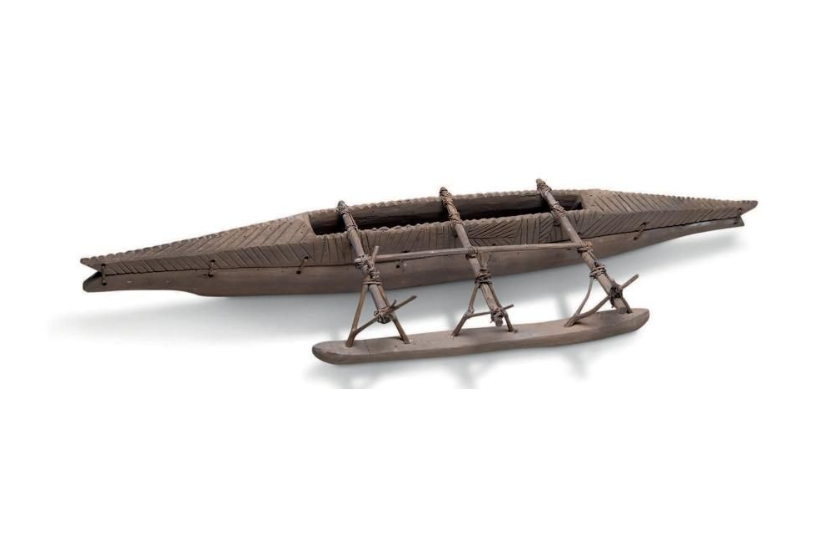
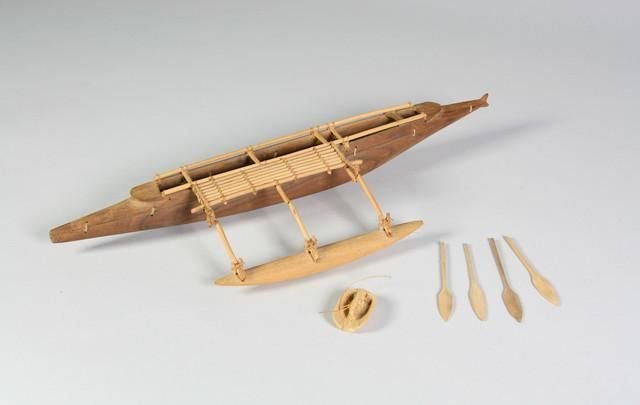
This is a model canoe replicating a Tuvalu canoe. of the type “Paopao”.
TUVALU
TePapa_Vaka-model-outrigger
TUVALU
A Niutao island canoe on exhibit at the Ethnologisches Museum Berlin-Dahlem.
POLYNESIA
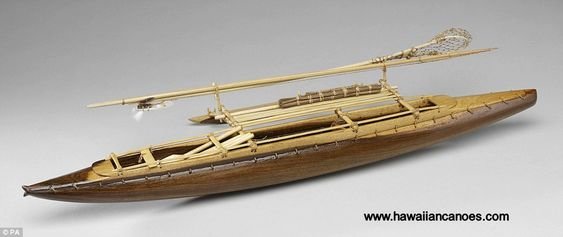
Canoe model
TUVALU
Formerly “Ellice” Island. Fishing canoe vaka alo from Nui island
TUVALU
TUVALU
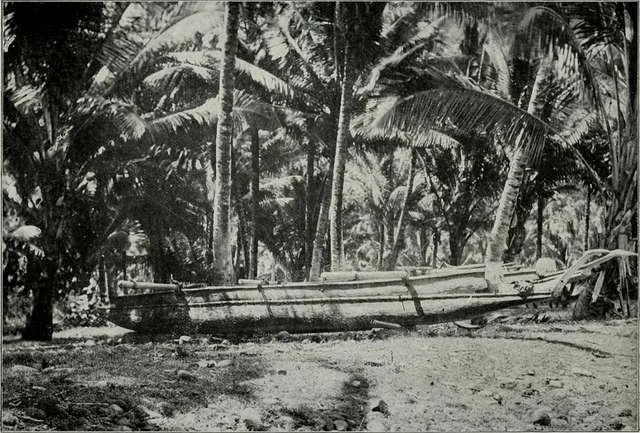
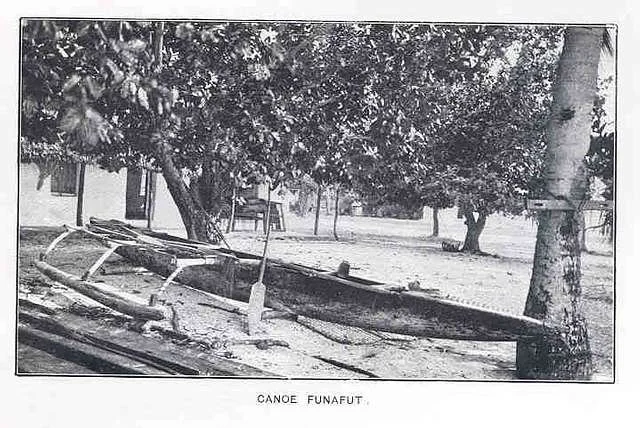
Showing the typical stern end section of the Funafuti canoes. Tuvalu canoes were traditionally plank built sewn together with coconut fiber rope
TUVALU
Hard to localize but looks to be from Vaitupu which is an atoll in Tuvalu
TUVALU
Fishing canoe vaka alo from the central island NUI
TUVALU
Fishing canoe vaka alo from the northern islands like Nanumanga and Niutao
TUVALU
A northern canoe.
TUVALU
Line drawings and tGerman terminology of the various canoe parts
TUVALU
19C photo of a Tuvalu canoe in Funafut
TUVALU
Fishing canoe “Vaka Alo”
WALLIS & FUTIUNA
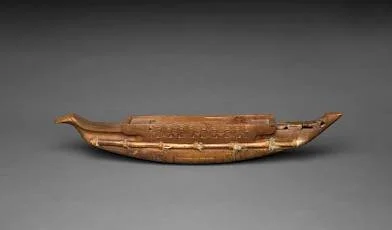
Small Futuna Island canoe model
BOOK ILLUSTRATION
19th Century lithography illustrating canoes from Polynesia, Micronesia and Melanesia
MARQUESAS
Te’Enana canoe model, late 19C, 5 ¼ x 3 11/16 × 33 ¾ inches . Saint Louis Art Museum, Gift of Morton D.
MARQUESAS
Illustration by Jules Dumont D’Urville showing New-Zealand, Papua New Guinea, Sulawesi canoes
Hawaii
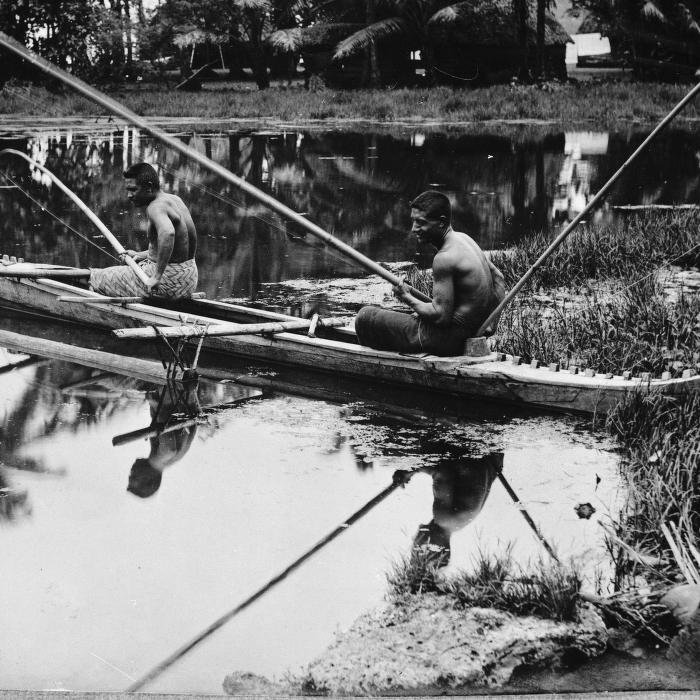
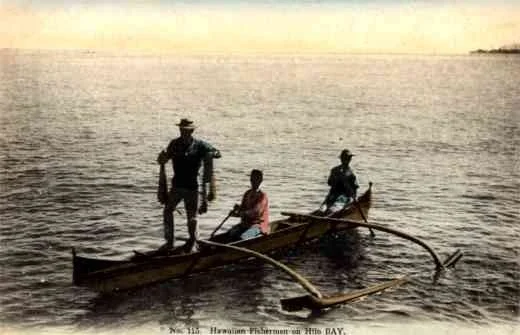
Hawaiian fishermen in canoe. Photographic postcard, published by Hilo Drug Co. , Hilo, Hawaii
29236277004_019e7f76fa_b.jpg
HAWAII
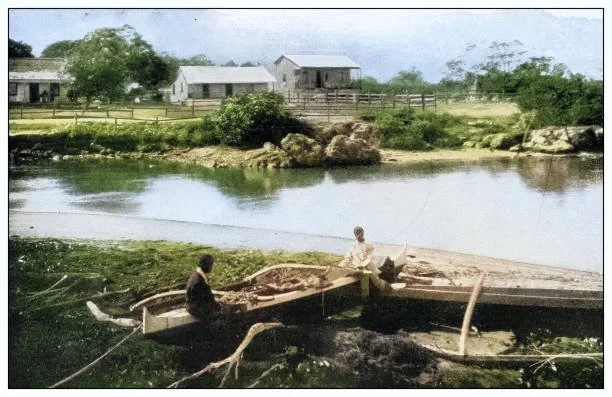
Antique photograph of people from islands in the Caribbean and in the Pacific Ocean; Cuba, Hawaii, Philippines and others: Wainae, Oahu, Hawaii
HAWAII
Antique photograph of people from island of Hawaii
20210707_094451.jpeg
HAWAII
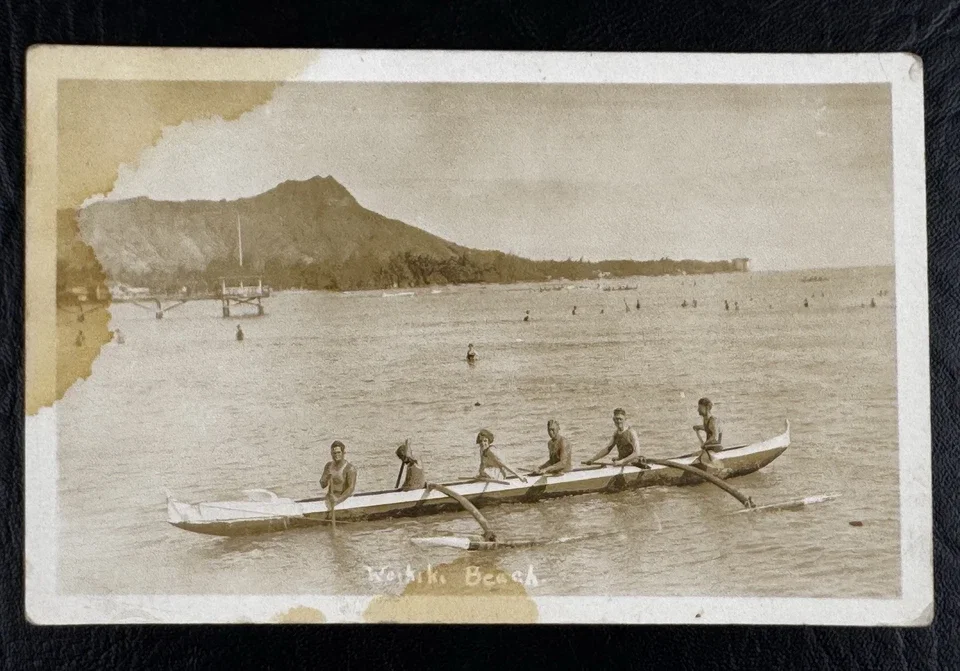
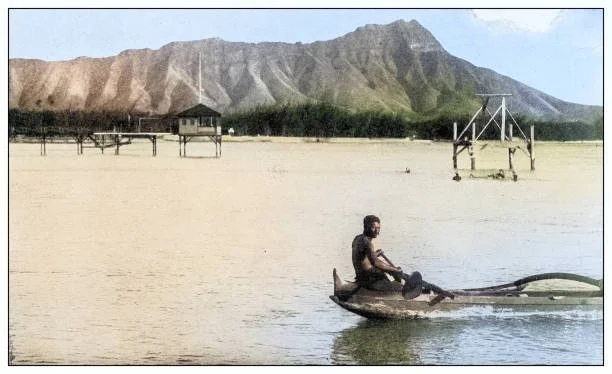
Antic photo showing Hawaiian in a racing canoe.
istockphoto-498212017-612x612.jpg
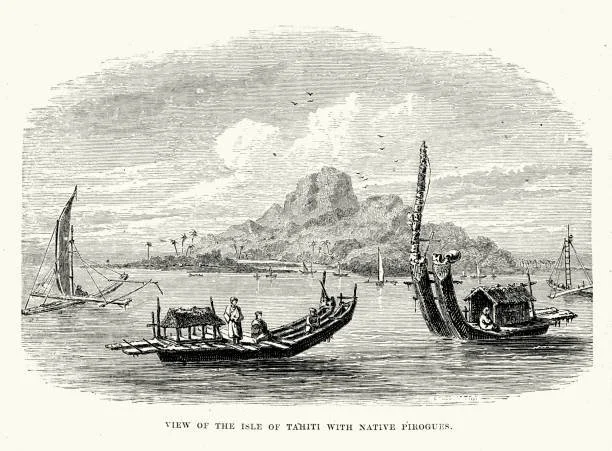
Vintage engraving showing a view of Tahiti with native pirogues. 19th Century