Amongst the many types of canoes built across Oceania, one particular type stands out: the Samoan canoe
The tufuga fau va’a (Samoan master canoe builder) built the most beautiful canoes, often imitated and only equaled by the Fijian carpenters. The lines of those vessels are extremely fine and perfect, like some elongated equal triangle starting amidship towards the bow and the stern.
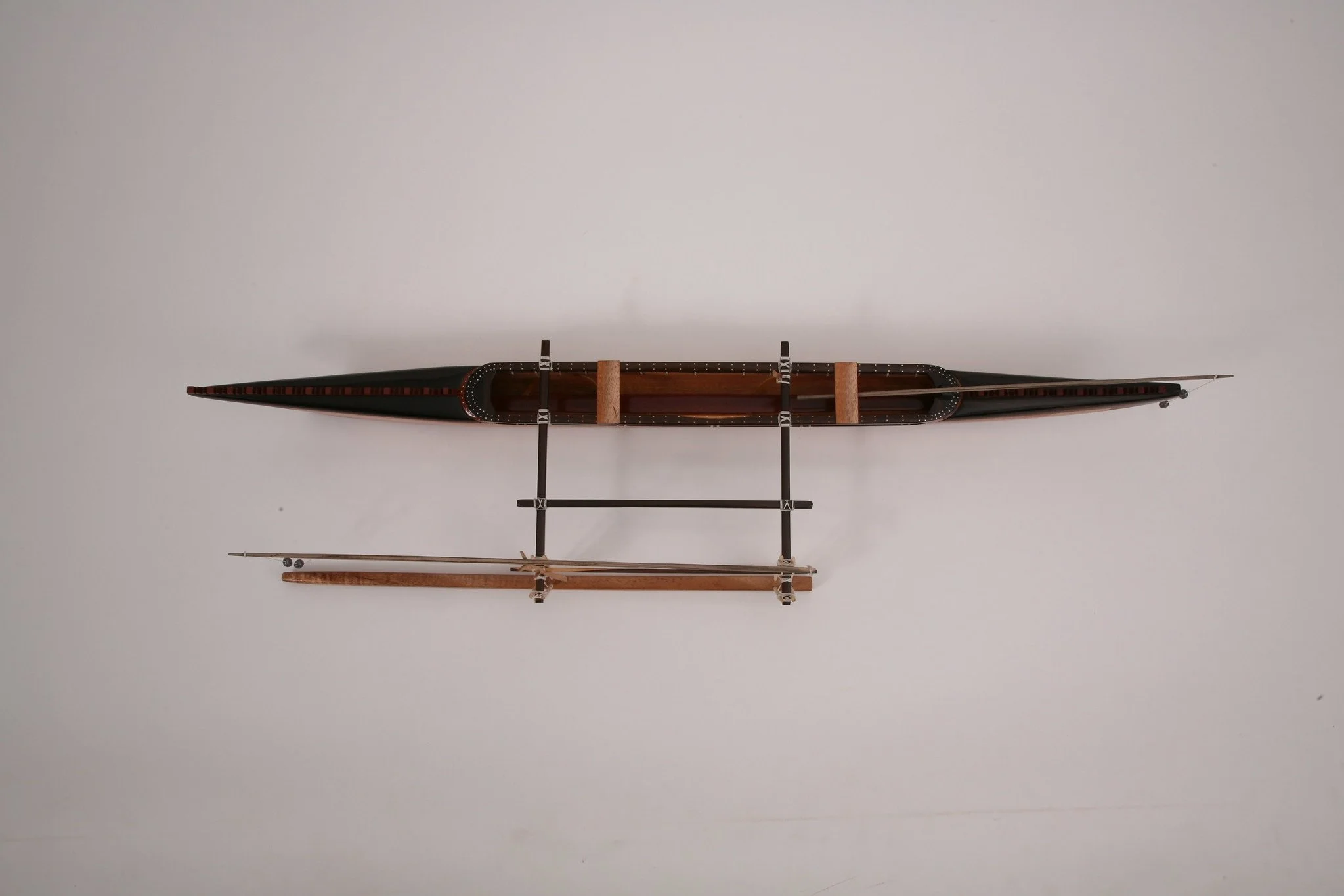
Note the extremely tapered shape, front and back of the canoe. It was made for speed.
Other characteristics make the Samoan canoe exceptional, and I am thinking here in particular of the VA’A ALO fishing canoe .
The Va'a alo, like the SOATAU, the AMATASI , the double-hulled VA’A TELE, and KALIA were all plank-built, meaning that planks were used to create the hull of the vessel.
The canoes of Tuamotu, Easter Island, Tahiti in Polynesia, Kiribati and Nauru in Micronesia, and the Solomon Islands in Melanesia are built from assembled wooden pieces. But their method of assembly is quite primitive; it is the method of lashing "through and through."
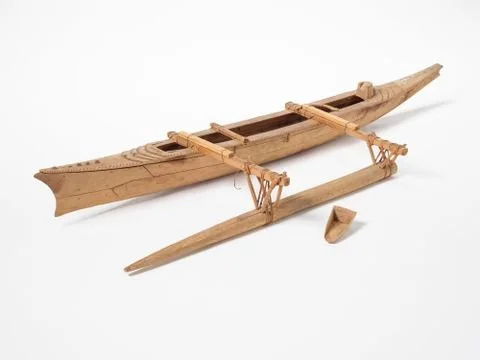
A plank-built Samoan fishing canoe at the New-Zealand Museum Tepapa collections.
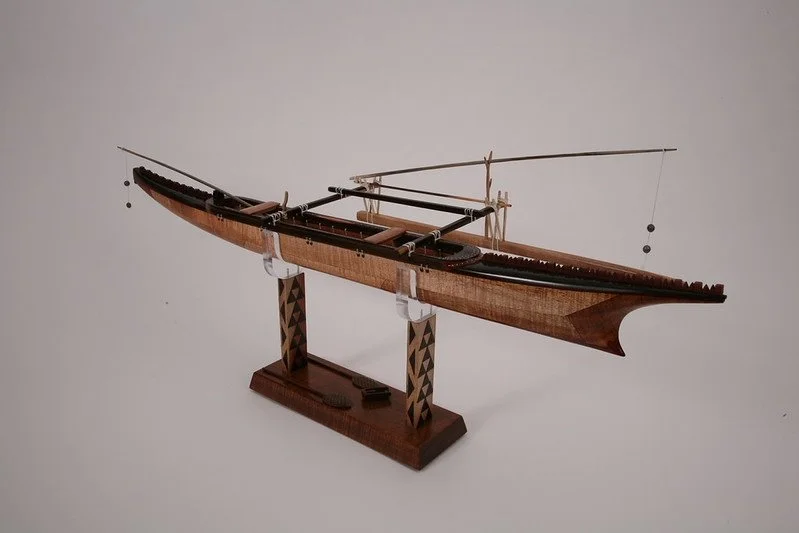
This 32 inch model I built in 2012 was entirely plank-built.
The Samoan carpenters perfected this technique, and it is likely they who developed the method of internal ligatures, or invisible lashings called TAFASI. I have used that procedure on the VA’A ALO model canoe I built in 2012 for the Four Seasons Hotel Resort at Manele Bay, Lanai.
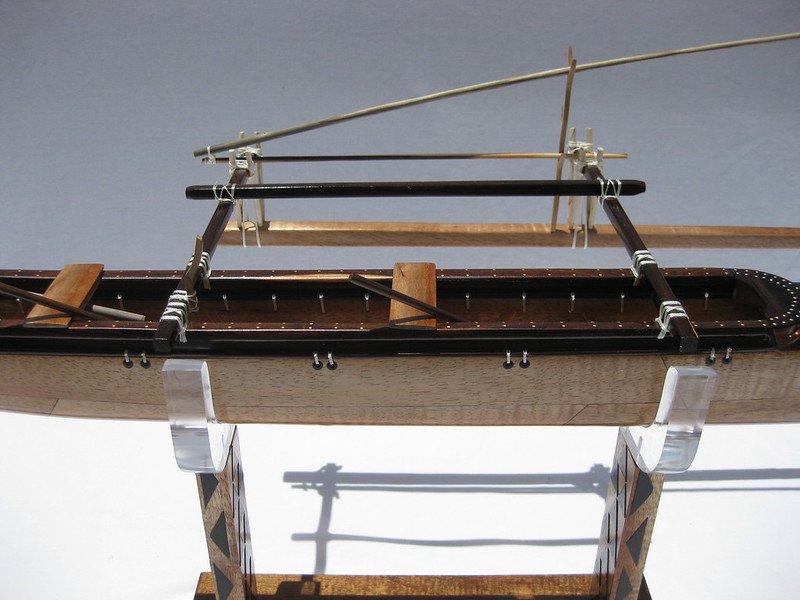
Clearly visible are the "hidden" interior and exterior lashings of the gunwales. There are 5 sets of exterior hidden lashings per side and 18 interior hidden lashings per side.
Wallis, Tonga, and Fiji adopted this method later on.
While the above islands assembled the planks forming the canoe's hull with hidden lashings, Hawaii used hidden lashings to add the gunwales to the top edge of the hull.
There is another major particularity that makes the Samoan canoe different from all the other canoes built, whether in Polynesia, Micronesia, or Melanesia, and this is how the vertical forward edge of the bow was concave, resembling the open mouth of a shark. The Samoan literally invented the CUTWATER, a shape that slices through the water, allowing for less resistance and increasing speed. Today, modern vessels feature engineered bows that serve the same hydrodynamic purpose.
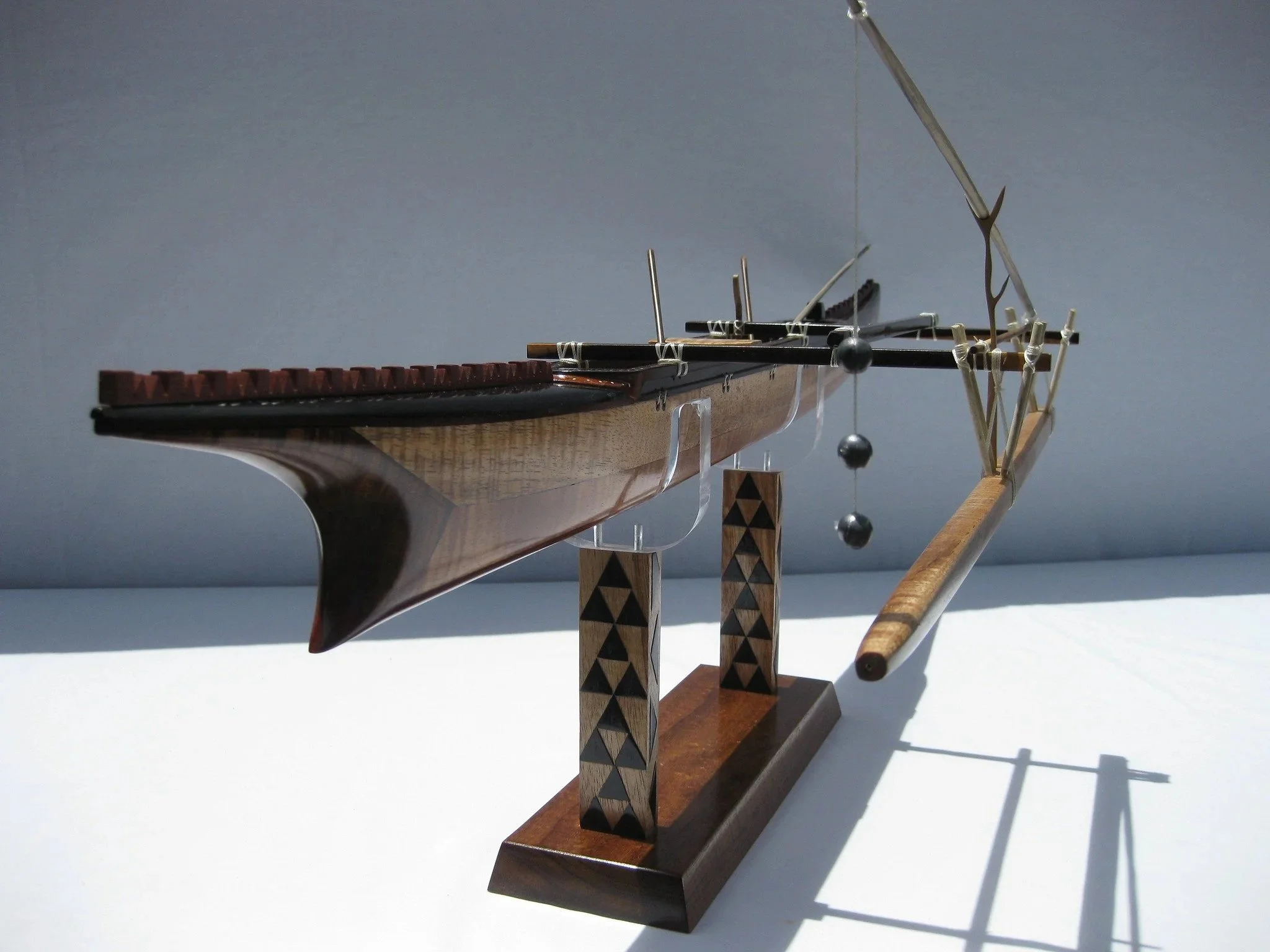
The cutwater or forward-end of this Wa’aalo canoe model.