KING KAMEHAMEHA I fundamentally transformed Polynesian maritime warfare by revolutionizing traditional ocean-based combat through the integration of Western technology, heavy artillery, and coordinated amphibious strategies.
Before KAMEHAMEHA’s ascension, Polynesian naval warfare was defined by highly ritualized clash-of-arms combat, with double-hulled and outrigger canoes used primarily for mass troop transport rather than as standalone tactical weapons.
KAMEHAMEHA recognized the overwhelming advantage of Western technical innovations following early European contacts. He mounted heavy ship cannons onto large double-hulled war canoes and sailing ships. The most famous of these was a four-pounder brass cannon nicknamed LOPAKA. The war canoes are known as PELELEU
KAMEHAMEHA I recruited captured or stranded Western sailors like JOHN YOUNG and ISAAC DAVIS. They served as specialized tactical advisors, training his elite corps as musketeers and maintaining his artillery pieces.
Similarly, British carpenters trained the native Hawaiians and KAMEHAMEHA trusted foreign advisors in the art of Western shipbuilding, design, and tool usage.
THE EVOLUTION OF THE PELELEU FLEET.
Around 1796, KAMEHAMEHA commissioned a specialized fleet of over 120 massive, deep-hulled pelelleu war canoes, modified for long-distance invasions and heavy weaponry.
The PELELEU canoes shifted away from traditional triangular Hawaiian sails, adopting Western fore-and-aft schooner rigging. This hybrid technological update allowed them to sail effectively into the wind while carrying artillery.
METAL TOOLS AND SANDALWOOD DIPLOMACY
To rapidly construct those Peleleu hulls out of dense koa wood and equip them with artillery, KAMEHAMEHA traded heavily in regional sandalwood with foreigners to procure high-quality Western steel and iron adzes, chisels, ship spikes, and cannons. Metal tools radically accelerated hull carving and allowed artisans to easily craft the deep structural blocks required to frame the heavy cannon mounts.
I have been commissioned to build a 3-foot model of the PELELEU, and will, in the course of building it, try to imagine and somehow replicate on a smaller scale the way the carpenters of KING KAMEHAMEHA I would have simplified canoe construction while using tools and materials of their time.
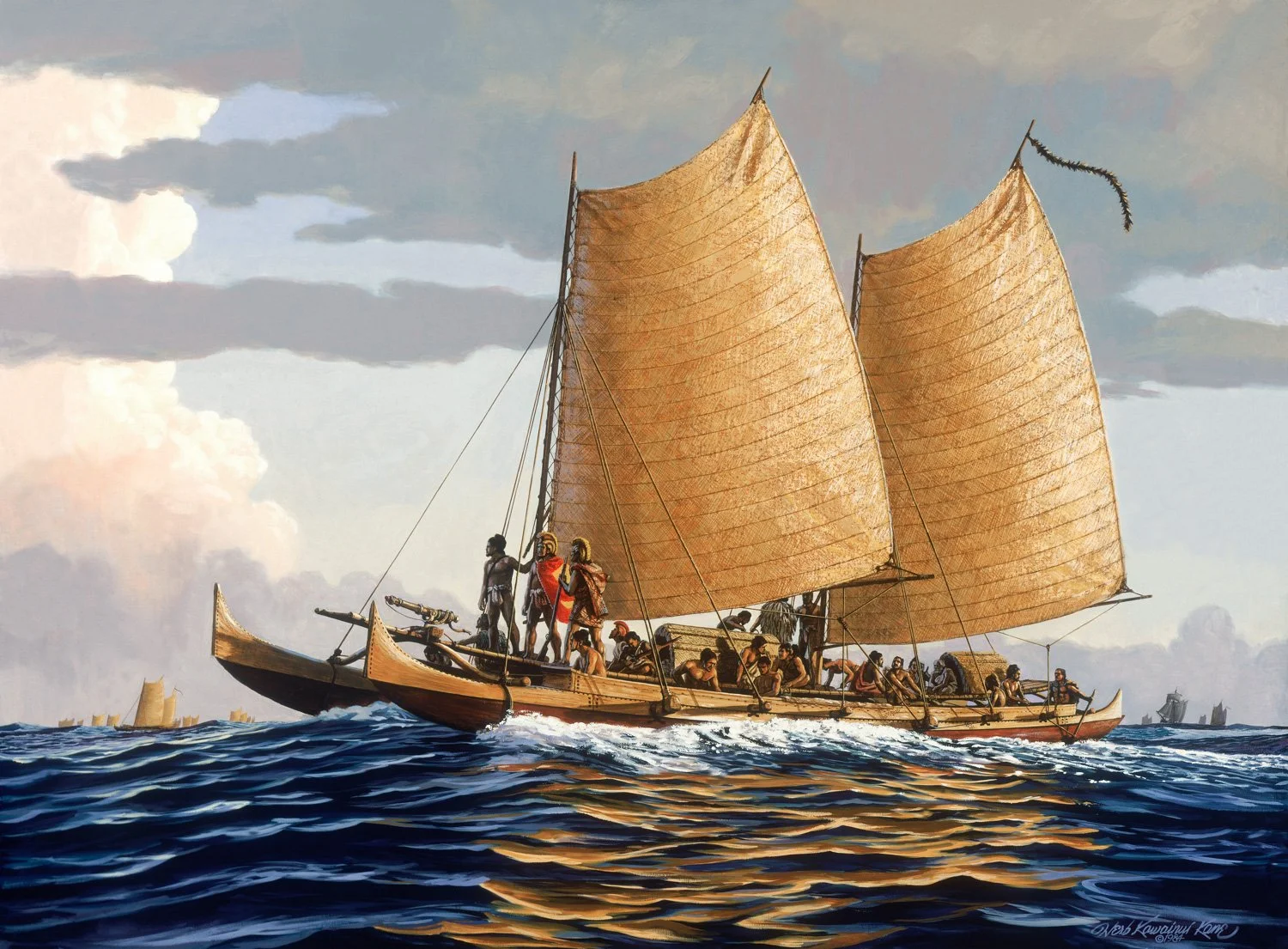
HERB KAWAINUI KANE- PELELUE WAR CANOE